Disease Prevention
Changing Biology Before Disease Begins
Disease prevention has traditionally focused on identifying risk factors, detecting disease early, and treating illness after it develops. While these approaches have saved countless lives, advances in nutrition science, microbiome research, and epigenetics are revealing another important opportunity: influencing the biological processes that occur long before disease becomes detectable.
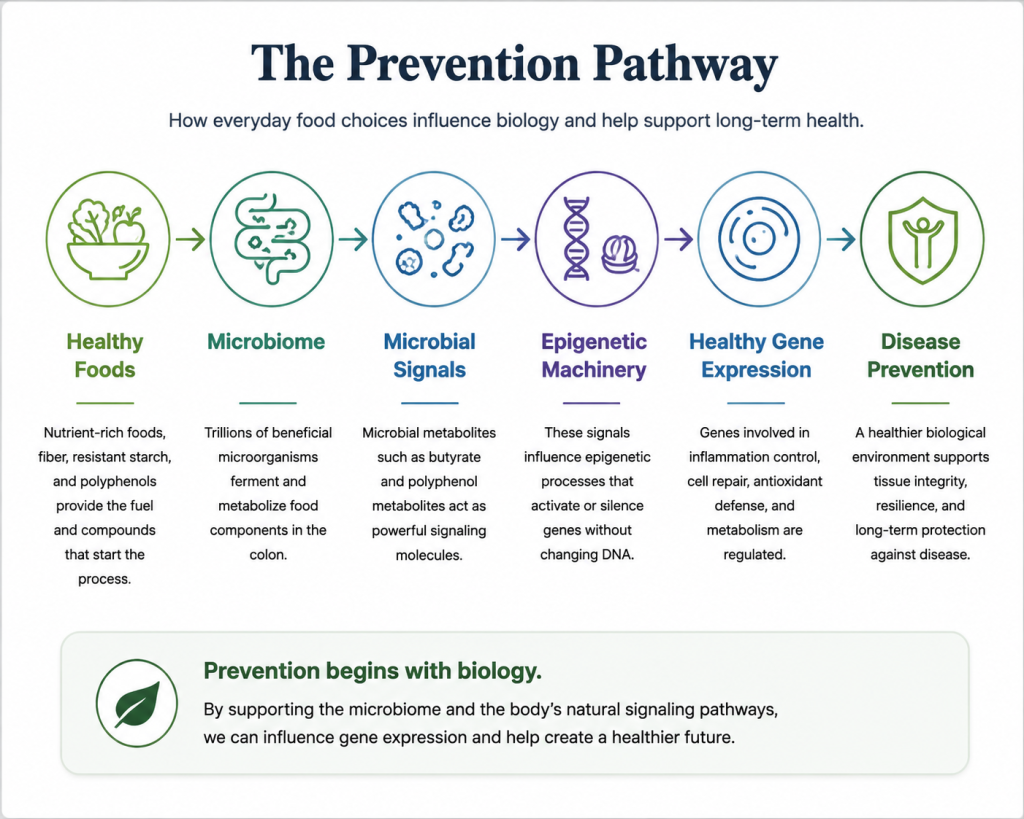
Every meal delivers more than calories. It provides nutrients that interact with the trillions of microorganisms living within the colon, generating biological signals that communicate with our cells. These signals help regulate gene expression, inflammation, metabolism, immune function, and tissue repair—processes that collectively influence long-term health.
Epigenetic nutrition explores how everyday food choices may help create a healthier biological environment. Although no dietary pattern can guarantee disease prevention, growing scientific evidence suggests that nutrition and the gut microbiome play important roles in supporting the body’s natural mechanisms for maintaining health.
What This Means for You
Disease prevention is no longer viewed solely as finding disease early. It also includes understanding how daily lifestyle choices influence the biological systems that help keep us healthy. By supporting the microbiome, promoting beneficial microbial metabolites, and encouraging healthy gene expression, nutrition becomes an active participant in lifelong wellness.
Why This Matters
Begin the Prevention Journey
The science of disease prevention is becoming increasingly clear: health is influenced not only by the genes we inherit, but also by the biological signals generated through nutrition, the microbiome, and everyday lifestyle choices.
These signals can affect inflammation, metabolism, tissue repair, and gene expression long before disease becomes detectable. Although no food or dietary pattern can guarantee prevention, supporting healthier biological pathways may help create an internal environment that is more resistant to disease.
Our first and most comprehensive prevention program explores the colon—where food, the microbiome, microbial metabolites, and human cells interact continuously. Understanding these interactions provides a new perspective on how nutrition may help support long-term colorectal health.
Colorectal Cancer Prevention
Discover how dietary fiber, resistant starch, polyphenols, the gut microbiome, butyrate, and epigenetic regulation may influence the earliest biological conditions associated with colorectal cancer.