Epigenetics & Gene Regulation
How Cells Decide Which Genetic Instructions to Use
Nearly every cell contains essentially the same DNA, yet a colon cell behaves differently from a liver, muscle, or immune cell. The difference is not simply which genes the cell possesses. It also depends on which genes are accessible and how actively their instructions are used.
Gene regulation is the collection of processes that controls when, where, and how strongly genes are expressed.
Epigenetic regulation is one important part of this system. It influences gene activity without changing the underlying sequence of DNA.
DNA Is Packaged, Not Left Exposed
Inside the nucleus, DNA is wrapped around proteins called histones and organized into a structure called chromatin.
Chromatin can be arranged in a more accessible state, allowing cellular machinery to reach particular genes, or in a more compact state that makes those genes less accessible.
The organization of chromatin is continually adjusted in response to development, cellular identity, metabolic state, environmental conditions, and signals received by the cell.
Epigenetic regulation therefore does not usually function as a simple permanent switch. It helps establish patterns of accessibility and activity that can be stable, temporary, or reversible.
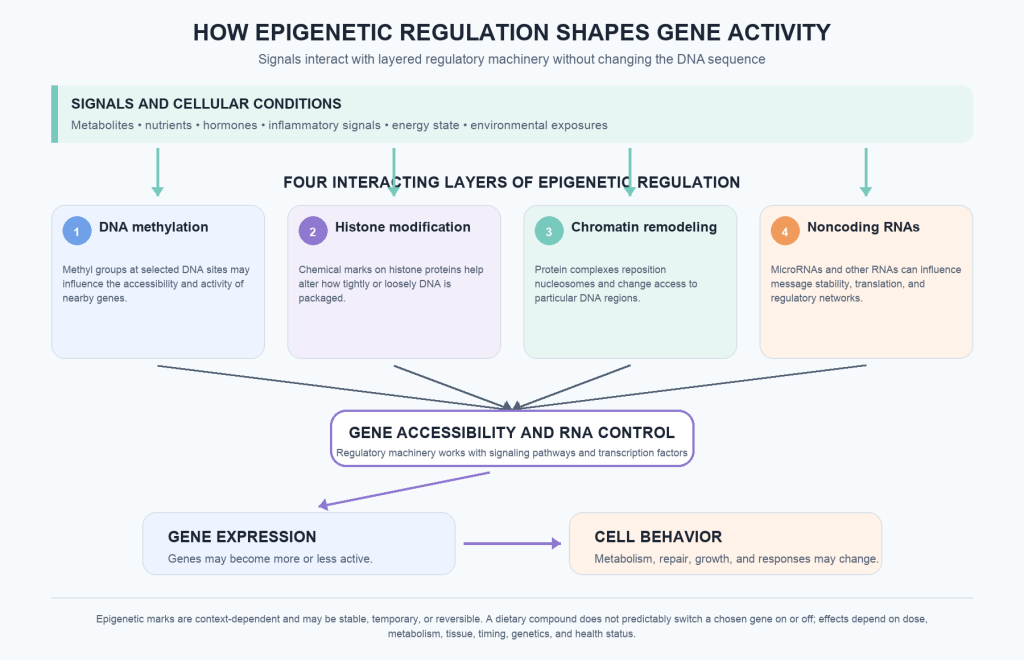
Four Interacting Layers of Epigenetic Regulation
DNA Methylation
DNA methylation involves attaching small chemical groups called methyl groups to particular locations on DNA.
Depending on their location and biological context, methylation patterns can influence whether nearby genes are accessible and how actively they are transcribed.
The cell obtains the chemical materials used in methylation reactions through normal metabolism. Folate, choline, betaine, methionine, and several B vitamins participate in metabolic pathways that help maintain the cellular supply of methyl donors.
This does not mean that consuming more of a methyl-donor nutrient will predictably activate or silence a particular gene. The effects depend on nutritional status, dose, tissue, genetics, metabolism, and the existing regulatory state of the cell.
Histone Modification
Histones are proteins around which DNA is wrapped. Enzymes can add or remove chemical groups from histones, influencing how tightly the surrounding chromatin is organized.
Histone acetylation is often associated with more accessible chromatin, while removal of acetyl groups can contribute to a more compact structure. Histone methylation is more context-dependent and may be associated with either increased or decreased gene activity.
These modifications work in combinations rather than as isolated marks.
Chromatin Remodeling
Chromatin-remodeling complexes can reposition or reorganize nucleosomes—the units formed by DNA wrapped around histones.
This remodeling changes how easily transcription factors and other regulatory proteins can reach particular regions of DNA.
Chromatin remodeling allows cells to respond to signals while preserving the specialized identity of the tissue.
Noncoding RNAs
Not every RNA molecule is used to make a protein. MicroRNAs and other noncoding RNAs can help regulate which messenger RNAs are translated, degraded, or maintained.
Through these actions, noncoding RNAs can adjust the amount of protein produced from particular genes and participate in broader networks of cellular regulation.
Where Metabolic Signals Enter the System
The metabolites discussed on the preceding pages may interact with gene regulation through several routes.
For example:
- Butyrate can act as a metabolic fuel and can inhibit some histone deacetylases in experimental systems.
- Cellular metabolism helps determine the availability of methyl donors used by enzymes involved in DNA and histone methylation.
- Polyphenols and their metabolites have been studied for interactions with enzymes involved in DNA methylation, histone modification, and noncoding-RNA regulation.
- Metabolic and inflammatory signals can activate transcription factors that recruit epigenetic machinery to particular regions of DNA.
- Oxidative state, energy availability, and mitochondrial activity can influence enzymes that modify chromatin.
These pathways overlap. A metabolite may affect cellular signaling, metabolism, and chromatin regulation at the same time.
From Gene Regulation to Cell Behavior
Changes in gene expression can affect many cellular functions, including:
- Energy metabolism
- Antioxidant defenses
- Inflammatory signaling
- Intestinal barrier maintenance
- Cell growth and differentiation
- DNA repair and stress responses
- Removal of aging or damaged cells
Gene expression is dynamic. Genes may become more or less active as cells receive new signals and adapt to changing conditions.
A change in gene activity is not automatically beneficial or harmful. Its meaning depends on the gene, the tissue, the strength and duration of the response, and the biological circumstances in which it occurs.
What Nutrition Research Can—and Cannot—Show
Laboratory studies demonstrate that nutrients, microbial metabolites, and plant-derived compounds can interact with epigenetic mechanisms.
Human studies also identify associations between dietary patterns, nutritional exposures, and differences in DNA methylation or other regulatory markers. However, the findings vary, and evidence for predictable gene-specific effects from individual foods remains limited.
It is therefore more accurate to say that nutrition contributes to the biological environment in which gene regulation occurs—not that a food directly turns a chosen gene on or off.
The EpiNutrition Connection
EpiNutrition examines how food-derived and microbiome-derived compounds may enter cellular signaling and metabolic pathways that interact with the machinery regulating gene activity.
The proposed sequence is:
Food and dietary substrates → microbial and human metabolism → biological signals → cellular and epigenetic regulation → changes in gene activity and cell behavior
This sequence represents an interconnected biological system rather than a guaranteed pathway from a particular food to a particular health outcome.
The practical lesson is not to search for one “epigenetic food.” It is to understand how sustained nutritional patterns help shape the metabolic and signaling environment in which cells regulate their genes.