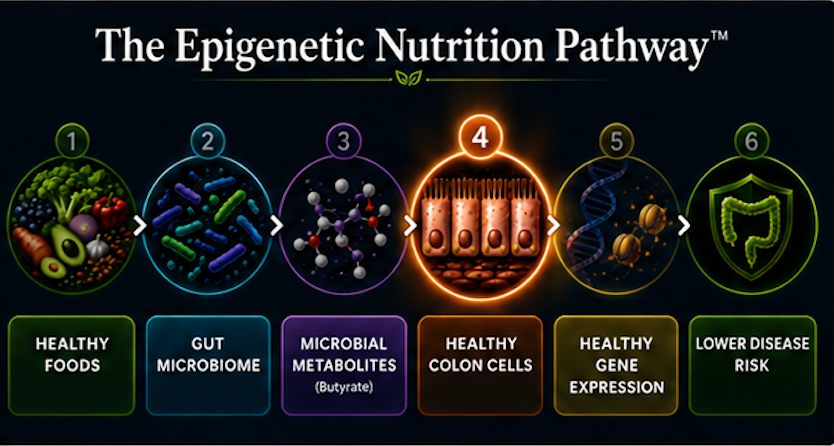
Butyrate Promotes Healthy Cellular Function
The colon is lined by millions of specialized epithelial cells called colonocytes. These cells form the inner surface of the large intestine and serve as the primary interface between the body and the trillions of microorganisms that inhabit the gut. Every few days, the entire lining is renewed, requiring a continuous supply of energy and precise regulation of gene expression to maintain barrier integrity, tissue repair, and normal cellular function.
Unlike most cells in the body, colonocytes rely primarily on butyrate as their preferred energy source. Butyrate is a short-chain fatty acid produced when beneficial gut bacteria ferment dietary fiber and resistant starch in the colon. After entering colonocytes, butyrate is transported into the mitochondria, where it is metabolized to generate ATP, the energy required for cellular maintenance, repair, and renewal. This steady supply of energy supports one of the fastest rates of cellular turnover in the human body and helps preserve the intestinal barrier that separates the body’s internal environment from the microbial world within the colon.
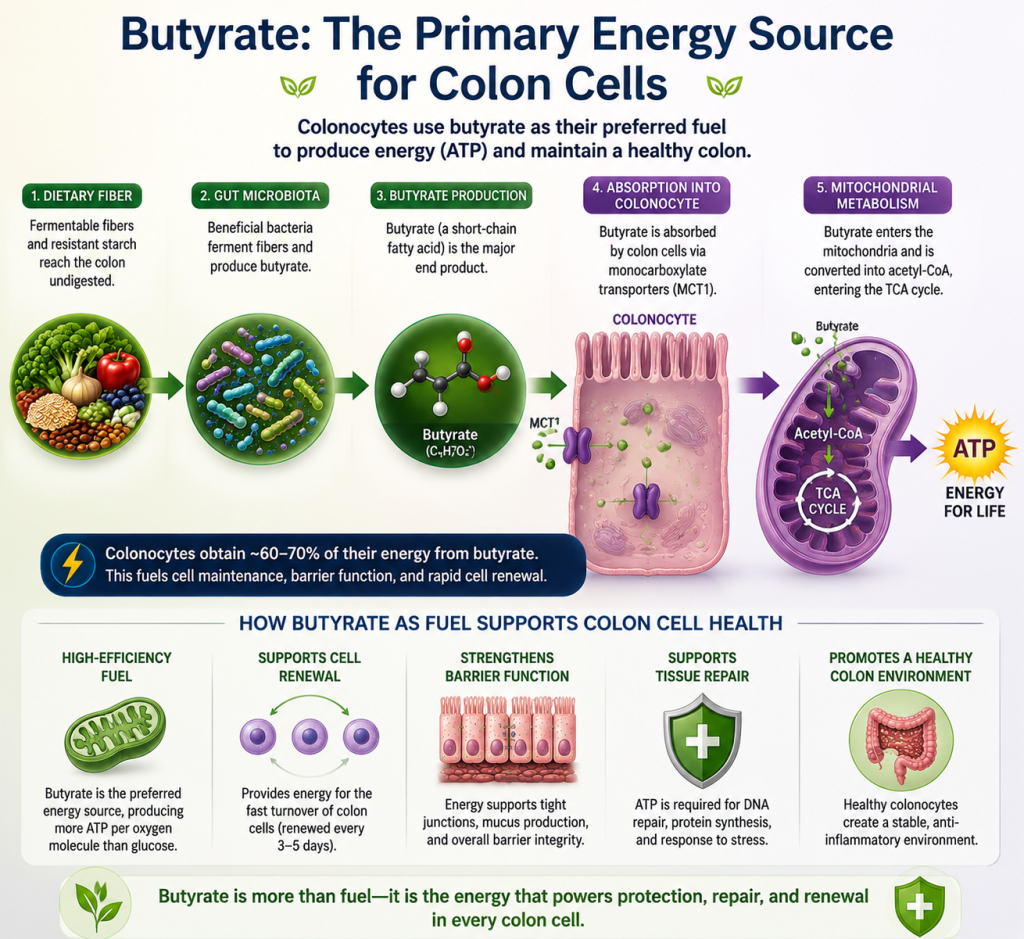
But butyrate does more than provide fuel. It also functions as a biological signaling molecule that communicates with the cell’s epigenetic machinery. After entering the cell, butyrate inhibits enzymes known as histone deacetylases (HDACs). HDAC inhibition increases chromatin accessibility, allowing specific genes involved in cellular repair, differentiation, antioxidant defense, and anti-inflammatory pathways to become more active. Through this epigenetic mechanism, butyrate helps coordinate how colonocytes respond to their environment and maintain healthy patterns of gene expression.
Butyrate Helps Restore Normal Cellular Metabolism
One of the earliest metabolic changes observed in the development of colorectal cancer is the Warburg effect, a shift away from normal mitochondrial energy production toward increased glucose utilization and glycolysis, even when oxygen is available. Although this metabolic strategy supports rapid cell growth, it is less efficient for energy production and is accompanied by abnormal patterns of gene expression, increased inflammation, and impaired cellular differentiation.
Butyrate helps counter many of these changes through its unique dual role as both an energy source and an epigenetic regulator. In healthy colonocytes, butyrate enters the mitochondria, where it is metabolized through oxidative pathways to generate ATP, restoring efficient energy production and supporting normal cellular metabolism. At the same time, butyrate inhibits histone deacetylases (HDACs), increasing chromatin accessibility and promoting the expression of genes involved in differentiation, DNA repair, antioxidant defense, and controlled cell growth.
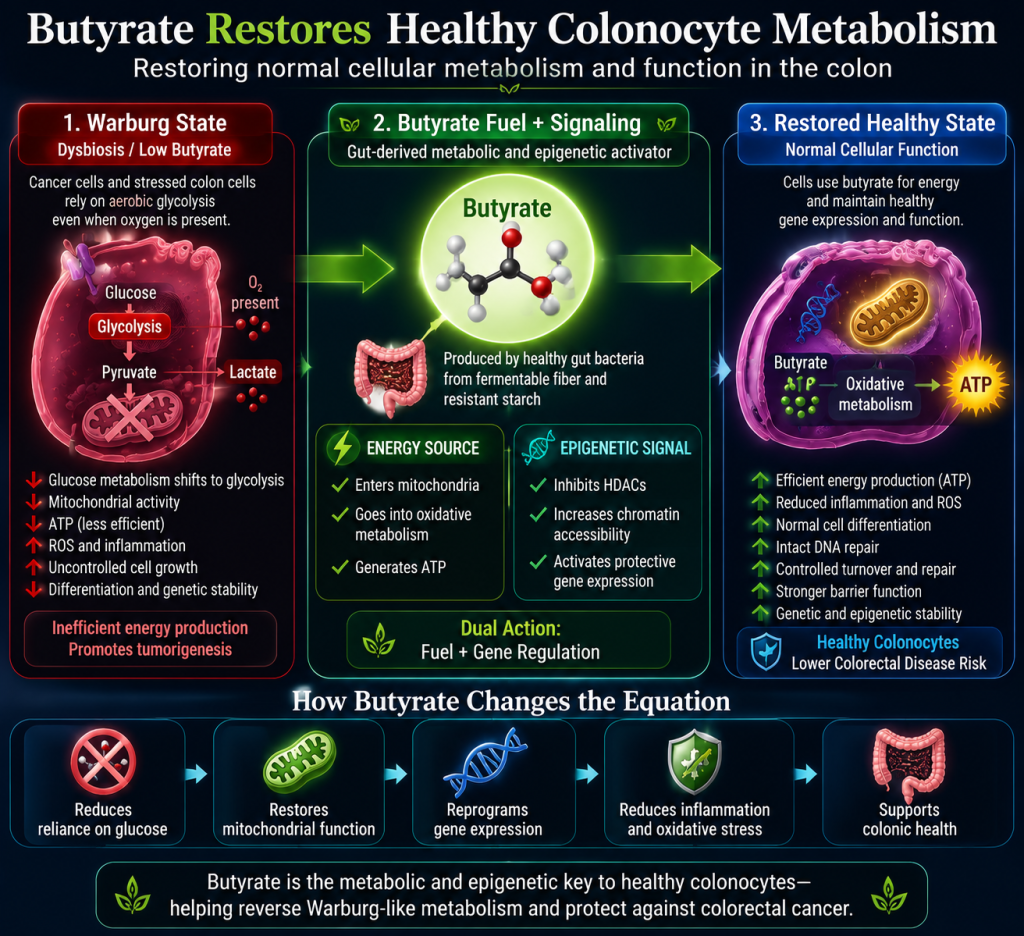
Together, these complementary actions shift the cell away from the Warburg phenotype and back toward normal oxidative metabolism. Rather than relying primarily on glucose fermentation, healthy colonocytes use butyrate as their preferred fuel while simultaneously maintaining the epigenetic programs required for normal cellular function. In this way, butyrate serves as both a metabolic fuel and a molecular signal that helps preserve colon health and reduce the biological conditions that favor colorectal cancer development.
This dual role—as both an energy source and an epigenetic regulator—is one of the defining features of a healthy colonocyte. Energy production keeps the cell functioning, while epigenetic regulation helps ensure that the right genes are expressed at the right time. Together, these complementary actions promote normal cellular metabolism, strengthen the intestinal barrier, regulate inflammation, and support long-term tissue health.
When butyrate production declines because of a low-fiber diet or disruption of the gut microbiome, colonocytes lose both their preferred fuel and an important source of epigenetic regulation. Cells may shift toward less efficient metabolic pathways, barrier function may weaken, inflammatory signaling may increase, and normal patterns of gene expression can become disrupted. These early biological changes may create conditions that favor the development of colorectal disease long before visible abnormalities appear.
The healthy colonocyte therefore illustrates one of the central principles of EpiNutrition™: food influences biology not only by supplying nutrients, but by generating microbial metabolites that simultaneously fuel cells and regulate the genetic programs that keep those cells healthy. In the colon, butyrate is the clearest example of this remarkable partnership between diet, the gut microbiome, metabolism, and epigenetic regulation.
Butyrate Plays a Key Role in Advancing the Epigenetic Nutrition Pathway™