Why the Colon is the Ideal Laboratory to Study EpiNutrition?
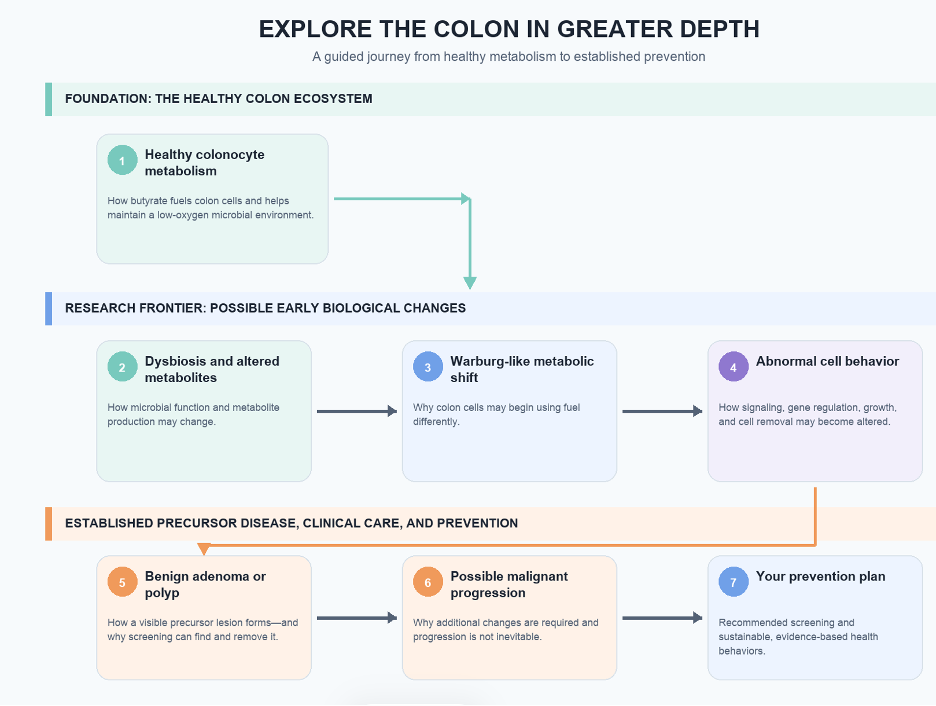
The colon provides an especially useful example of EpiNutrition because food, microorganisms, metabolites, and human cells interact within the same biological environment.
Dietary compounds reach the colon, where a dense, predominantly anaerobic microbial community transforms some of them into short-chain fatty acids and other metabolites. These compounds interact directly with colonocytes—the cells lining the colon—and may influence cellular metabolism, signaling, barrier function, immune activity, and gene regulation. It is this interaction that determines the health of your colon.