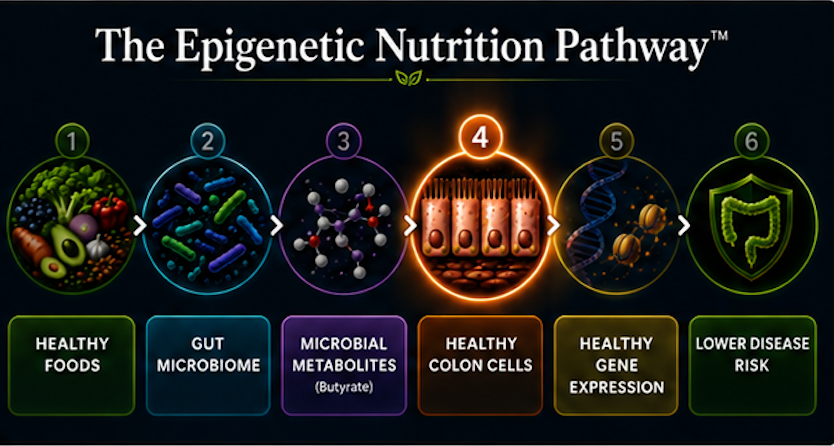
Tissue & Organ Health: From Healthy Cells to a Healthy Body
Healthy tissues and organs depend on millions of cells working together under coordinated patterns of gene expression. Once beneficial microbial metabolites activate the epigenetic machinery, the effects extend beyond individual cells to influence the function of entire organs and physiological systems. The result is improved tissue integrity, more effective immune regulation, healthier metabolism, and greater resilience throughout the body.
One of the most immediate examples is the intestinal barrier. In the healthy colon, butyrate promotes the expression of genes involved in maintaining tight junction proteins, including claudins, occludin, and zonula occludens (ZO) proteins. These specialized structures seal neighboring colonocytes together, forming a highly selective barrier that allows nutrients and beneficial microbial metabolites to enter the body while limiting the passage of harmful bacteria, toxins, and inflammatory molecules. A strong epithelial barrier reduces chronic inflammation and helps preserve the healthy relationship between the gut microbiome and the immune system.
Healthy gene expression also supports balanced immune function. Rather than continuously activating inflammatory pathways, epigenetic regulation helps immune cells respond appropriately to infection or injury while promoting the resolution of inflammation once the threat has passed. This balanced immune response protects tissues from unnecessary damage and contributes to long-term intestinal and systemic health.
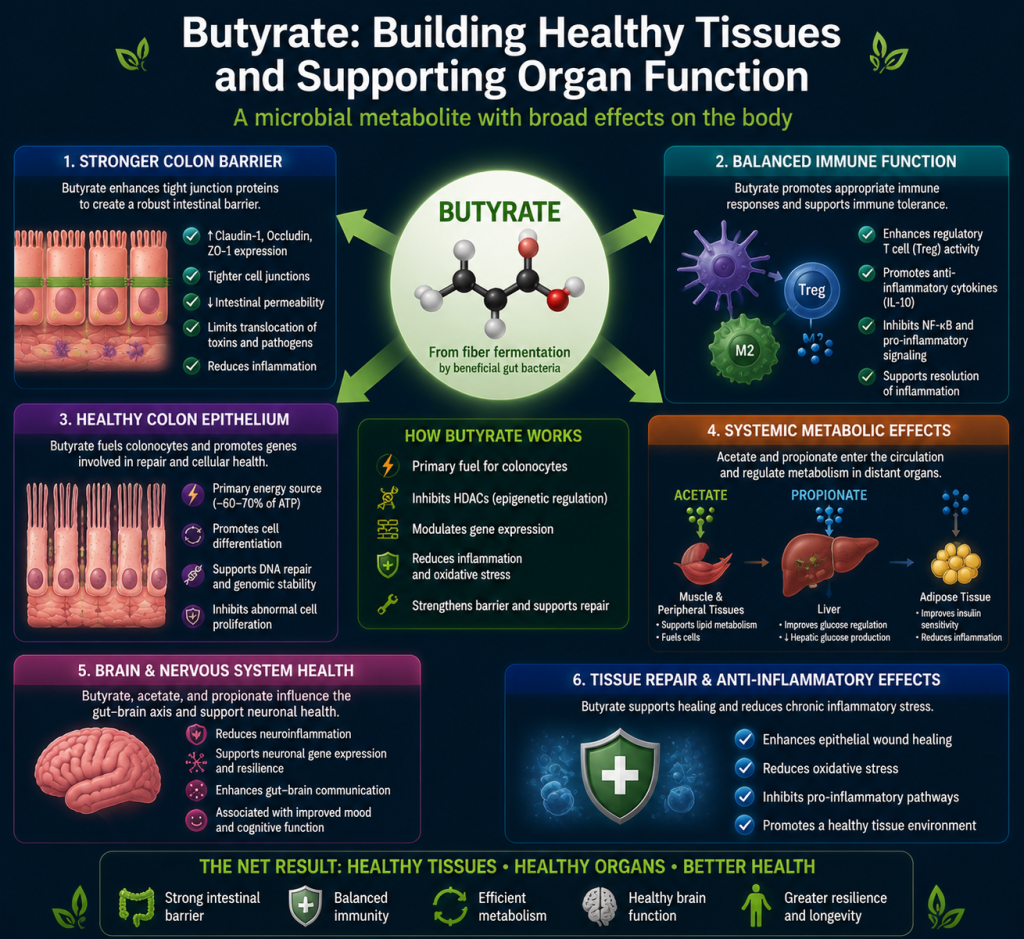
The influence of microbial metabolites extends beyond the colon. Acetate and propionate, two additional short-chain fatty acids produced during microbial fermentation, enter the circulation and participate in metabolic regulation throughout the body. Propionate is taken up largely by the liver, where it contributes to glucose homeostasis and helps regulate hepatic metabolism. Acetate is utilized by peripheral tissues and participates in lipid metabolism and cellular energy production. Together, these metabolites help maintain metabolic flexibility and support healthy glucose regulation.
Emerging research also suggests that microbial metabolites influence the central nervous system through the gut–brain axis. Acetate and propionate can affect immune signaling, neuroinflammation, and communication between the gut and the brain, while butyrate influences gene expression within neural tissues and supports mechanisms associated with neuronal resilience and healthy aging. Although this field is still evolving, these findings suggest that the biological effects of microbial metabolites extend well beyond the gastrointestinal tract.
Gene Expression and The EpiNutrition Pathway
The EpiNutrition™ pathway therefore illustrates an important principle: healthy gene expression does not simply improve the function of individual cells—it strengthens tissues, supports organ systems, and promotes the coordinated physiology required for lifelong health. By nourishing the gut microbiome and increasing the production of beneficial microbial metabolites, everyday food choices help establish the molecular signals that support barrier integrity, immune balance, metabolic health, and healthy aging throughout the body.