
How Microbial Butyrate Helps Power the Colon Lining
The inner surface of the colon is lined by epithelial cells called colonocytes. These cells form part of the barrier separating the body from the enormous microbial community living within the intestinal lumen.
Healthy, mature colonocytes have a distinctive relationship with that microbial community. Anaerobic bacteria ferment certain dietary fibers and resistant carbohydrates, producing short-chain fatty acids. One of these metabolites—butyrate—is readily used by colonocytes as an oxidative fuel.
Inside the colonocyte, butyrate can be converted into acetyl-CoA and processed through mitochondrial metabolism. This supports cellular energy production while consuming oxygen near the intestinal surface.
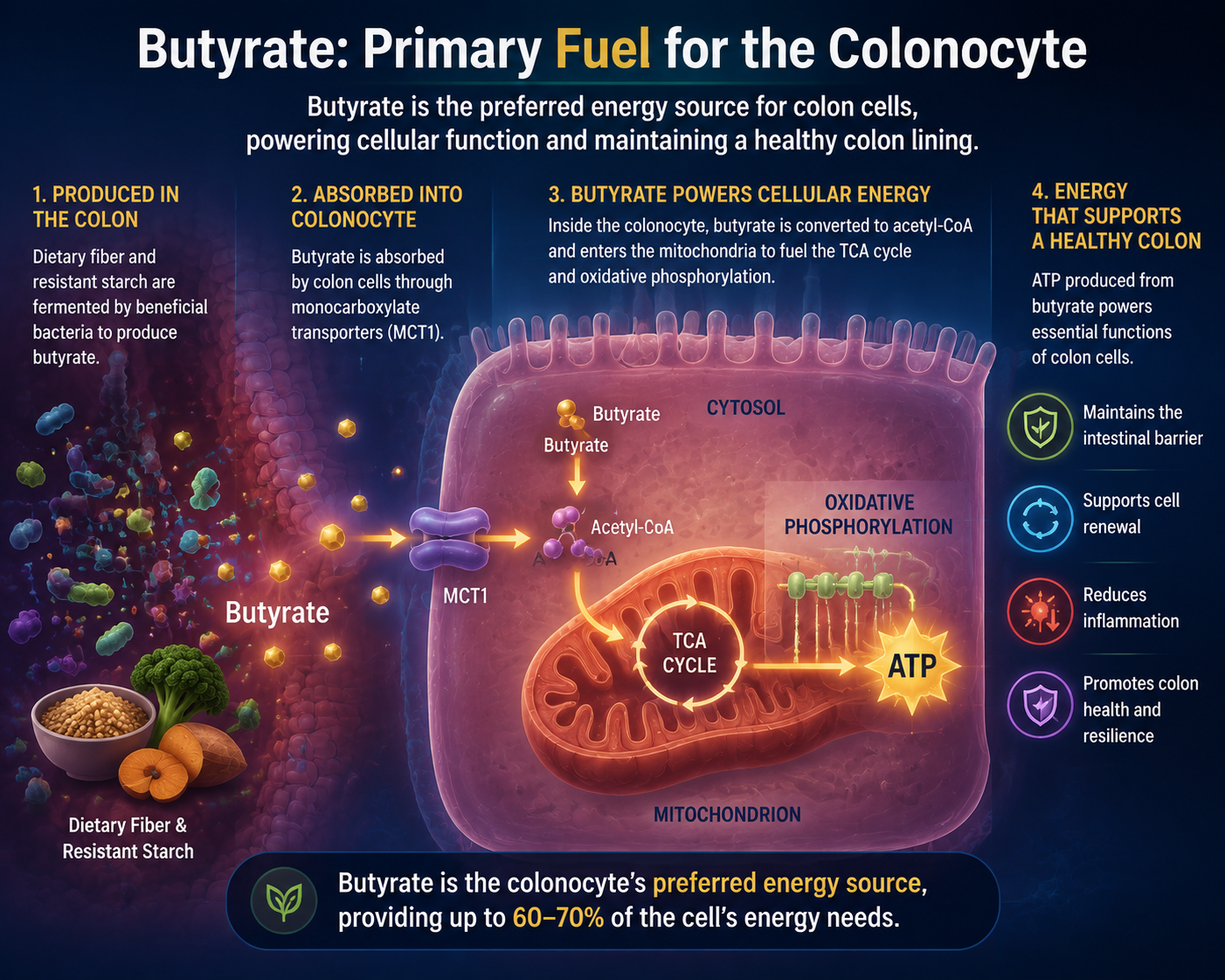
That oxygen consumption helps create the colon’s normal state of physiological hypoxia—a low-oxygen environment at the epithelial surface. By limiting the amount of oxygen that reaches the lumen, colonocyte metabolism helps favor oxygen-sensitive anaerobic microbes, including organisms that produce additional short-chain fatty acids.
A Cooperative Biological Cycle
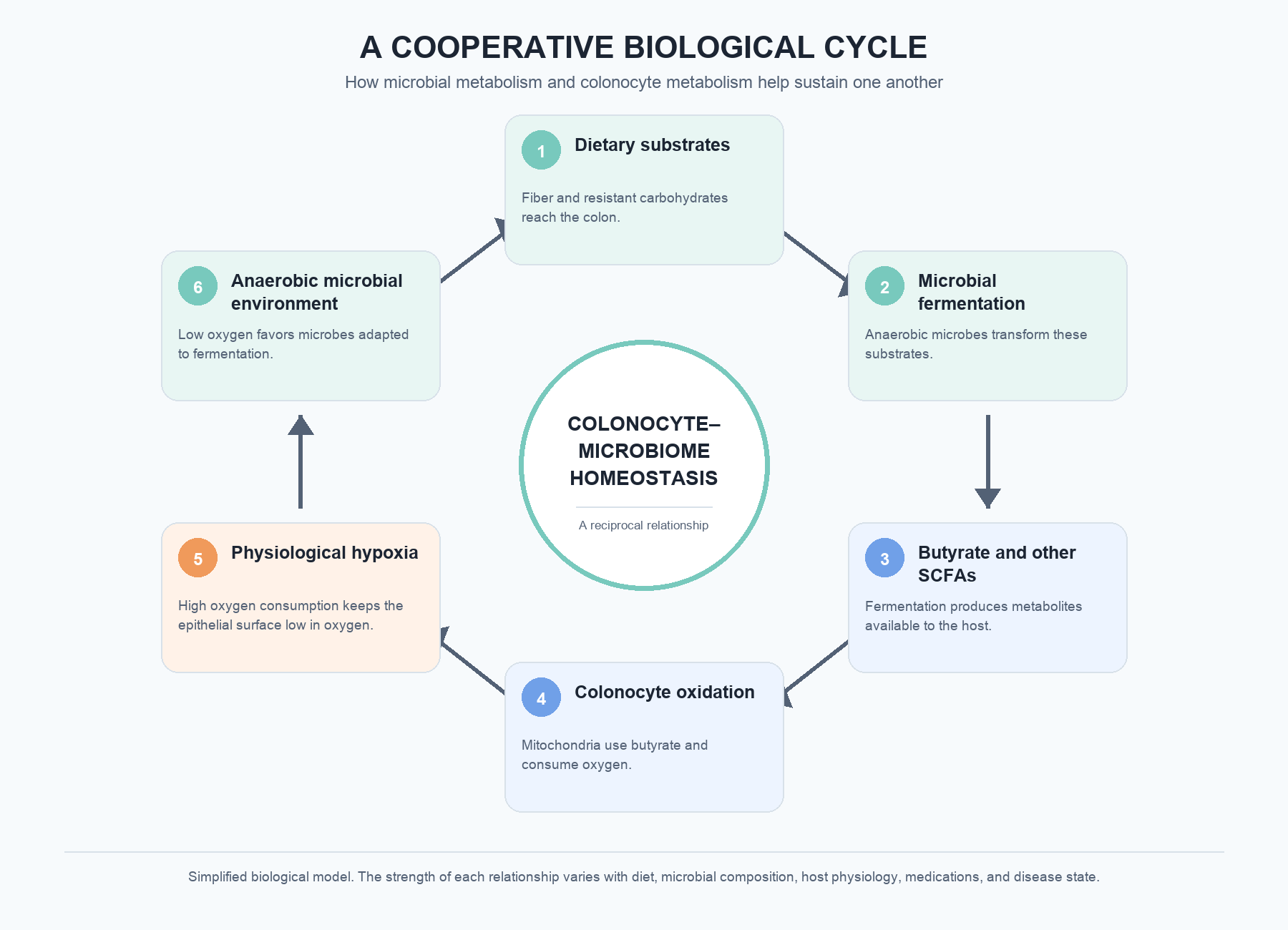
This creates a cooperative relationship between diet, microbial metabolism, and colon-cell physiology. Healthy colonocyte metabolism is therefore not simply an isolated cellular process; it is part of an interconnected biological ecosystem.
References
- Roediger WE. Role of anaerobic bacteria in the metabolic welfare of the colonic mucosa in man. Gut. 1980;21(9):793–798. doi: 10.1136/gut.21.9.793. PMID: 7429343; PMCID: PMC1419533.
- Kelly CJ, Zheng L, Campbell EL, Saeedi B, Scholz CC, Bayless AJ, et al. Crosstalk between microbiota-derived short-chain fatty acids and intestinal epithelial HIF augments tissue barrier function. Cell Host & Microbe. 2015;17(5):662–671. doi: 10.1016/j.chom.2015.03.005. PMID: 25865369.
- Byndloss MX, Olsan EE, Rivera-Chávez F, Tiffany CR, Cevallos SA, Lokken KL, et al. Microbiota-activated PPAR-γ signaling inhibits dysbiotic Enterobacteriaceae expansion. Science. 2017;357(6351):570–575. doi: 10.1126/science.aam9949. PMID: 28798125; PMCID: PMC5642957.