
Colorectal health
What happens in the colon after you eat a bowl of beans?
Some of a bean’s fiber reaches the microbes living next to the colon lining. Most of its protein takes a different route through the small intestine. These two routes show why EpiNutrition™ studies both how food influences gene activity and how it triggers signals inside cells.
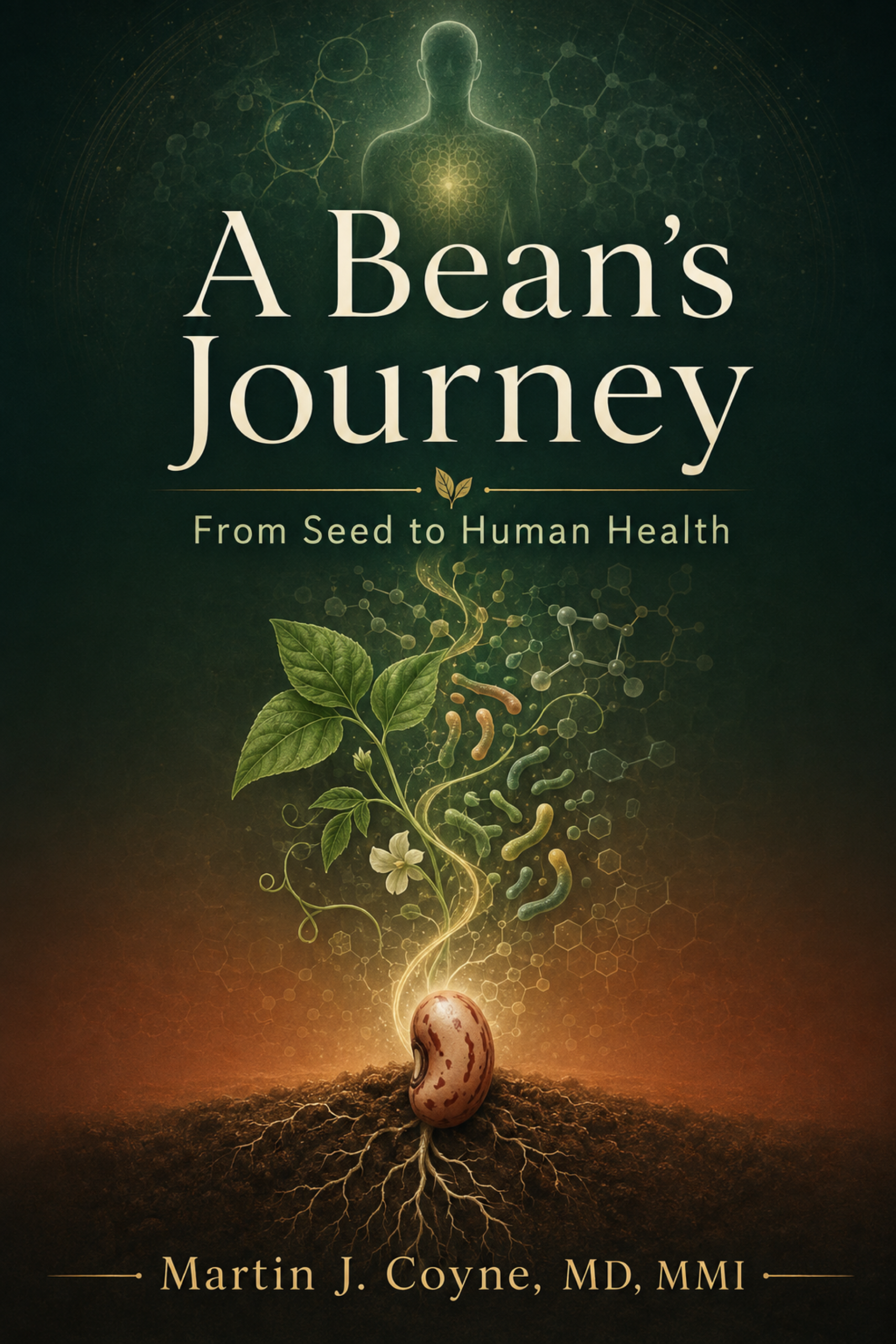 Read A Bean’s Journey
How does fiber feed the colon lining?
Resistant starch gets its name because it escapes digestion in the small intestine. It reaches the colon along with other fermentable fiber from the bean. Bacteria break down these carbohydrates and produce butyrate, a short-chain fatty acid. Cells lining the colon can use butyrate for energy.
Butyrate can also influence chemical marks on histones, the proteins around which DNA is wrapped. These marks help regulate which genes a cell can read. That is the epigenetics in this meal.
What signal does protein send?
Digestion releases amino acids from bean protein. Most are absorbed in the small intestine. Cells can sense one of those amino acids, leucine. When energy and other growth signals are available, leucine helps activate mTORC1, a pathway that tells cells they can build new proteins.
That matters in the colon because its lining continually replaces cells. In laboratory mice, raising mTORC1 activity changed how quickly cells in the colon lining divided. This is nutrient sensing in action. Explore the mTORC1 pathway.
How does the colon communicate with the brain?
Fullness offers one example. When gut microbes ferment fiber, they can also make propionate. In a human study, researchers delivered propionate directly to the colon. Levels of two gut hormones involved in fullness, PYY and GLP-1, rose, and participants ate less at a test meal. It illustrates one route along the gut–brain axis, the two-way communication system linking the gut and the brain.
What have studies in people found?
In the BE GONE trial, adults with a history of precancerous colorectal polyps or colorectal cancer added cooked navy beans to their usual diet for eight weeks. Researchers found a more diverse mix of gut bacteria during the bean phase. The trial measured changes in microbes and blood markers. Whether beans reduce cancer recurrence is a separate question.
For long-term colorectal cancer risk, the broader evidence points to a dietary pattern rich in fiber and whole grains. Whether timing protein intake changes that risk through mTORC1 remains an open question. Recommended colorectal screening is another important part of prevention. See the American Cancer Society’s screening guidance.
Put the science on your plate
Picture white bean soup with barley and greens. The beans supply protein as well as fermentable fiber, and the barley and greens add other sources of fiber. Use the Toolbox to build a meal around the beans you have.
Research behind this page
- Donohoe and colleagues on butyrate and histone regulation
- Wolfson and colleagues on leucine sensing
- mTORC1 and renewal of the colon lining in mice
- Chambers and colleagues on colonic propionate and appetite in humans
- The BE GONE randomized bean-feeding trial
- World Cancer Research Fund review of diet and colorectal cancer risk (PDF)