
The Colon – A Very Complex Organ
The colon is not simply a digestive organ. It is a highly active biological interface where nutrients, microbes, microbial metabolites, immune defenses, and epithelial cells interact continuously. The colonocyte, the cell that lines the colon, exists at the center of this remarkably complex environment (Lynch SV 2016). Much of this understanding comes directly from human studies.
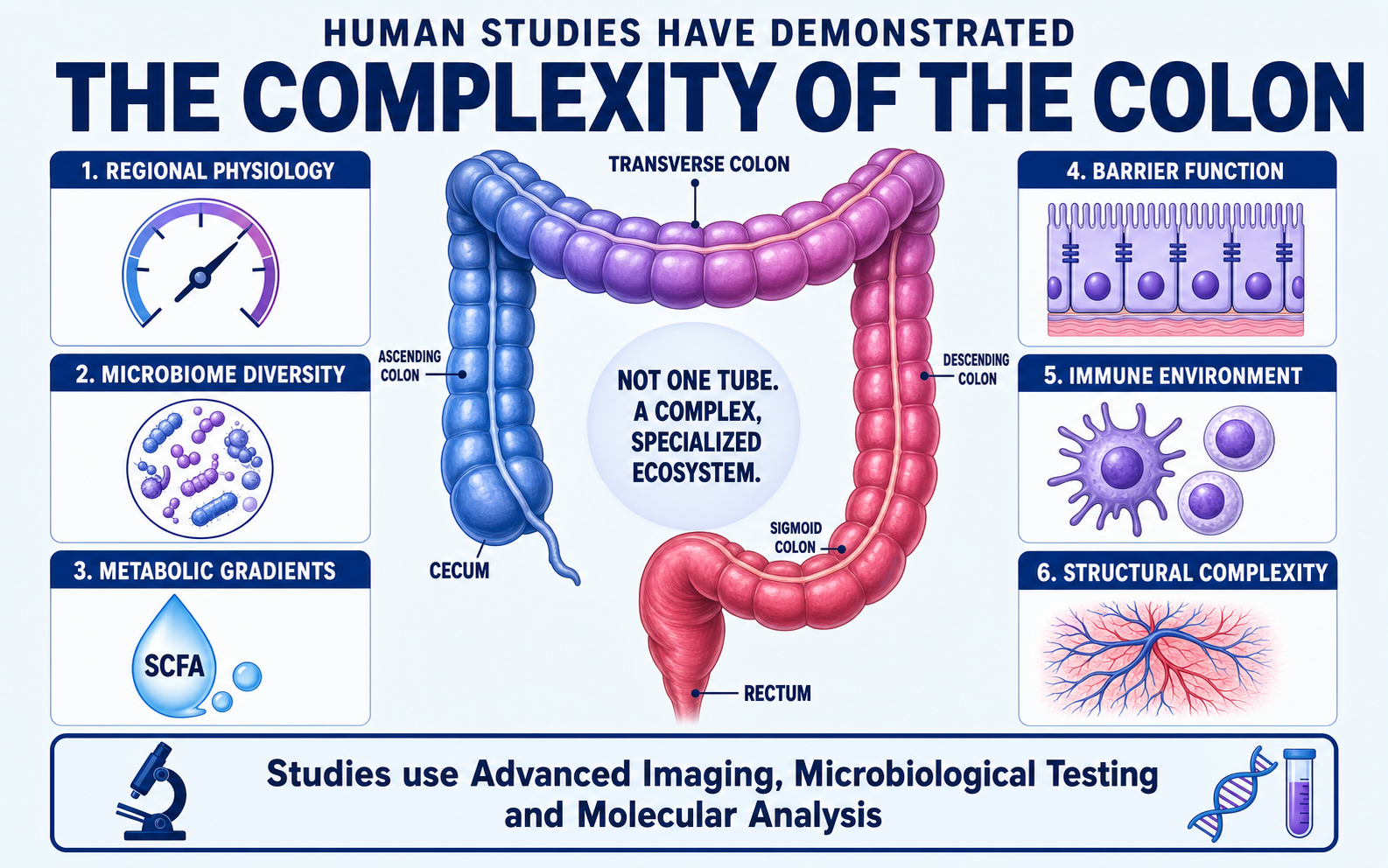
The colonocyte occupies one of the most biologically demanding environments in the human body. Although it is part of the body’s internal tissues, it sits directly adjacent to the colonic lumen, that is, in many respects, functionally outside the body. Everything a person eats and drinks eventually influences the contents of the colon.
Among the dietary components that most directly affect colonocyte biology are soluble fiber, polyphenols, and protein. How these nutrients interact with the colonocyte largely determines the health of the colon.
The Microbiome
A defining feature of this environment is the enormous microbial community residing within it. The colon contains trillions of microorganisms, together with vast quantities of dietary material, bacterial metabolites, digestive byproducts, dietary chemicals, and potential toxins.
Every day, the colonic epithelium must distinguish signals representing nourishment from those indicating harmless microbial activity or genuine danger. The challenge facing the colonocyte is therefore not simply one of digestion, but one of continuous adaptation and survival.
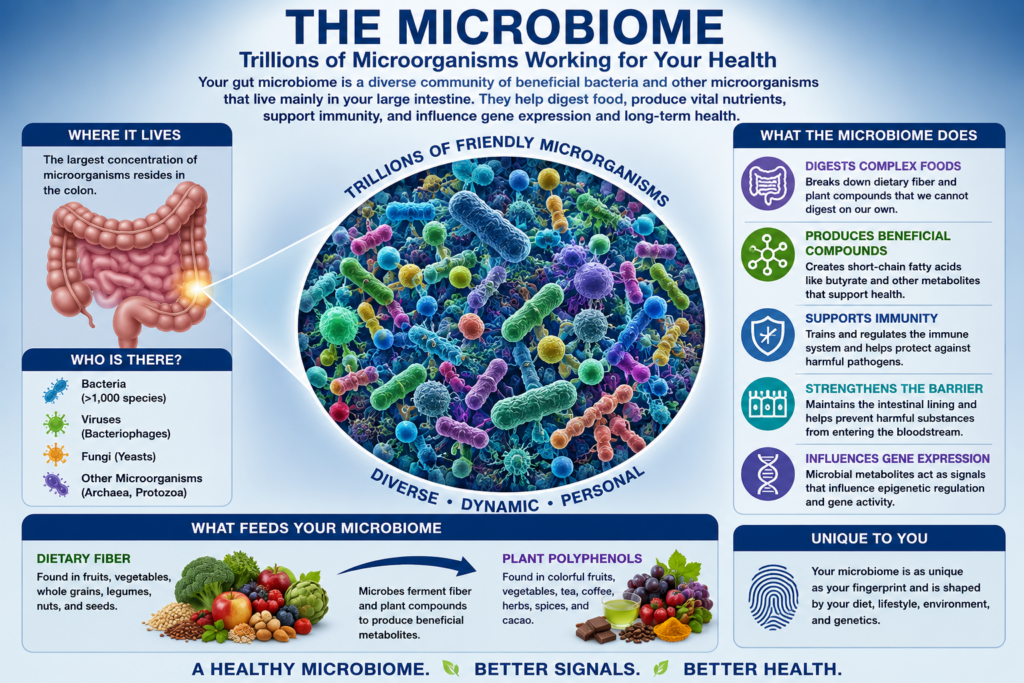
The scale of this exposure is extraordinary. The human colon contains one of the densest microbial ecosystems on Earth, with bacterial populations exceeding 10¹¹ to 10¹² organisms per gram of luminal content. These microbes perform essential functions, including fermentation of dietary fiber and production of beneficial short-chain fatty acids (SCFAs), particularly butyrate (Thursby E 2017).
At the same time, the same microbial community is capable of generating potentially harmful compounds, including hydrogen sulfide, ammonia, phenols, p-cresol, secondary bile acids, and N-nitroso compounds. The colonocyte must therefore function within an environment that is simultaneously beneficial and potentially toxic.
Adding to this complexity, the luminal environment changes continuously. Every meal reshapes the biochemical makeup surrounding the colonocyte by altering the substrates available for microbial fermentation. Fiber-rich diets favor saccharolytic(carbohydrate) fermentation and production of SCFAs, whereas high-protein, low-fiber diets promote proteolytic(protein) fermentation and generation of inflammatory metabolites. The colonocyte must constantly monitor these changing conditions and adjust its biological behavior accordingly. A cell incapable of adapting to these fluctuations would quickly become injured or dysfunctional (Cummings JH 1991).
Conclusion
The colon is far more than a passive tube for transporting intestinal contents. The colonocyte serves as an active sensor positioned at the interface between the outside world and the inner human body, continuously balancing nutrient absorption, microbial coexistence, immune regulation, cellular repair, and survival. This job is aided by the bacterial partners comprising the gut microbiome
References
- Sender R, Fuchs S, Milo R. Revised estimates for the number of human and bacteria cells in the body. PLoS Biol. 2016;14(8):e1002533.
- Human Microbiome Project Consortium. Structure, function and diversity of the healthy human microbiome. Nature. 2012;486(7402):207-214.
- Thursby E, Juge N. Introduction to the human gut microbiota. Biochem J. 2017;474(11):1823-1836.
- Lynch SV, Pedersen O. The human intestinal microbiome in health and disease. N Engl J Med. 2016;375(24):2369-2379.
- Cummings JH, Macfarlane GT. The control and consequences of bacterial fermentation in the human colon. J Appl Bacteriol. 1991;70(6):443-459.
- Louis P, Flint HJ. Formation of propionate and butyrate by the human colonic microbiota. Environ Microbiol. 2017;19(1):29-41.
- Flint HJ, Scott KP, Duncan SH, Louis P, Forano E. Microbial degradation of complex carbohydrates in the gut. Gut Microbes. 2012;3(4):289-306.
- Peterson LW, Artis D. Intestinal epithelial cells: regulators of barrier function and immune homeostasis. Nat Rev Immunol. 2014;14(3):141-153.
- Turner JR. Intestinal mucosal barrier function in health and disease. Nat Rev Immunol. 2009;9(11):799-809.
- Hooper LV, Littman DR, Macpherson AJ. Interactions between the microbiota and the immune system. Science. 2012;336(6086):1268-1273.
- Roediger WEW. Role of anaerobic bacteria in the metabolic welfare of the colonic mucosa in man. Gut. 1980;21(9):793-798.
- Hamer HM, Jonkers D, Venema K, Vanhoutvin S, Troost FJ, Brummer RJ. Review article: the role of butyrate on colonic function. Aliment Pharmacol Ther. 2008;27(2):104-119.
- Windey K, De Preter V, Verbeke K. Relevance of protein fermentation to gut health. Mol Nutr Food Res. 2012;56(1):184-196.
- Russell WR, Hoyles L, Flint HJ, Dumas ME. Colonic bacterial metabolites and human health. Curr Opin Microbiol. 2013;16(3):246-254.
- Siegel RL, Giaquinto AN, Jemal A. Cancer statistics, 2024. CA Cancer J Clin. 2024;74(1):12-49.
- Bultman SJ. Interplay between diet, gut microbiota, epigenetic events, and colorectal cancer. Mol Nutr Food Res. 2017;61(1):1500902.