What do Human Observational Trials Show Us?
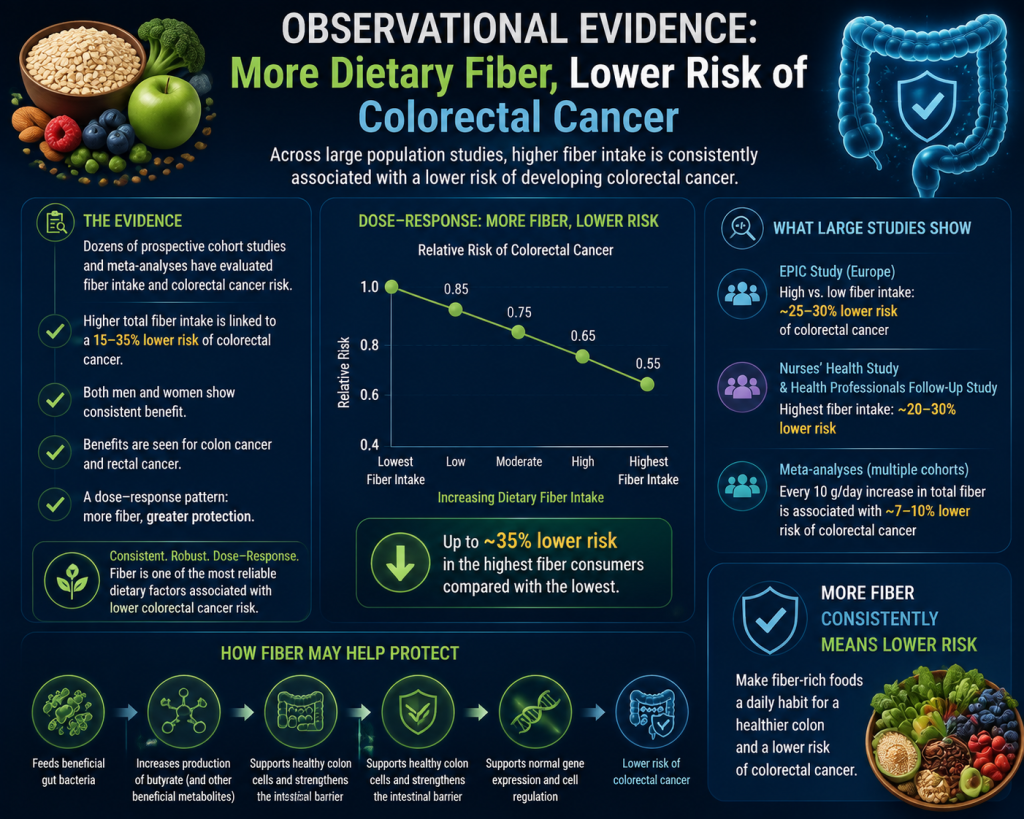
Observational studies have consistently shown that people who consume more dietary fiber have a lower risk of developing colorectal cancer.
What do Human Interventional Studies Show?
The next question is whether deliberately changing the diet can directly alter the biology of the colon. Human intervention trials provide the strongest evidence because they test whether a specific nutritional strategy can modify cancer-related processes under controlled conditions.
The AusFAP Study
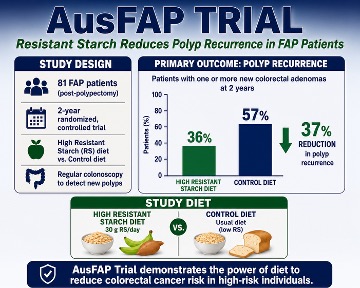
The first human interventional trial using a form of resistant starch (high-amylose maize starch) to reduce colorectal cancer risk was the Australian Polyp Prevention Project, commonly referred to as the AusFAP study. The trial is particularly important because it moved beyond epidemiology and attempted to test whether manipulation of colonic fermentation and microbial metabolism could directly influence carcinogenic processes in humans.
The study focused on patients with Familial Adenomatous Polyposis (FAP), an inherited condition caused primarily by mutations in the APC tumor suppressor gene. Individuals with FAP develop hundreds to thousands of colorectal adenomas and face an extremely high lifetime risk of colorectal cancer. Because adenoma formation occurs rapidly and predictably in FAP, these patients provide a useful model for studying chemoprevention and dietary interventions.
The AusFAP trial investigated whether supplementation with resistant starch could reduce adenoma burden or alter biomarkers associated with colorectal carcinogenesis (Williamson et al, 2006)
Participants in the trial were randomized to receive high-amylose maize starch (a form of resistant starch) or placebo over an extended treatment period. The underlying hypothesis was elegant: if resistant starch could increase butyrate production and shift the colonic ecosystem toward a more saccharolytic metabolic state, this might suppress epithelial proliferation, reduce DNA damage, and decrease adenoma development.
What Did Researchers Find?
First, resistant starch substantially altered colonic metabolism. Fecal butyrate production increased, luminal fermentation patterns changed, and markers of epithelial biology shifted in directions generally considered protective. These findings demonstrated that dietary substrates could indeed reshape the biochemical environment of the human colon.
Second and perhaps, more importantly, subsequent analyses suggested that resistant starch may preferentially reduce more advanced or high-risk neoplastic lesions rather than simply lowering total polyp counts. Some data indicated reductions in larger adenomas and alterations in proliferation markers within the colonic epithelium. This distinction matters enormously because cancer prevention may depend less on preventing tiny adenomas and more on suppressing progression toward advanced dysplasia and malignant transformation.
Tap to enlarge. Rotate your phone or pinch to zoom.
Third, the trial highlighted the complexity of dietary prevention biology. Resistant starch did not behave like a traditional pharmaceutical agent producing immediate binary effects. Instead, its effects appeared ecological and metabolic, influencing microbial fermentation networks, epithelial energetics, inflammatory tone, and epigenetic signaling. Such processes may require prolonged exposure and may vary considerably among individuals depending on baseline microbiome composition.
Key Findings
- Increase butyrate production
- Improved microbial fermentation
- Reduced biomarkers of carcinogenesis associated with colorectal carcinogeneis
- Possible reduction in advanced adenomas
- Demonstrated that resistant starch changes the biology of the human colon
The CAPP Study
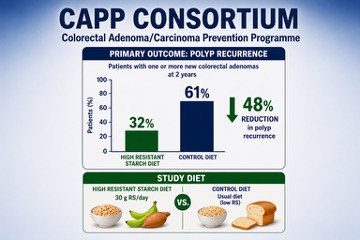
The promise of resistant starch became even more compelling when researchers evaluated another hereditary colorectal cancer syndrome—Lynch syndrome—in the international CAPP trial. This multicenter clinical trial demonstrated striking reductions in extracolonic cancers and delayed cancer incidence among participants receiving resistant starch supplementation, further supporting the concept that dietary modulation of the microbiome can influence long-term cancer risk (Burns et al., 2020).
Tap to enlarge. Rotate your phone or pinch to zoom.
Why These Studies Matter
Together, the AusFAP and CAPP studies fundamentally changed how researchers view resistant starch. Rather than acting simply as dietary fiber, resistant starch serves as a targeted fuel for beneficial gut bacteria. Through the production of butyrate and other microbial metabolites, it reshapes the metabolic and epigenetic environment of the colon in ways that may slow the progression from normal tissue to colorectal cancer.
What This Means for You
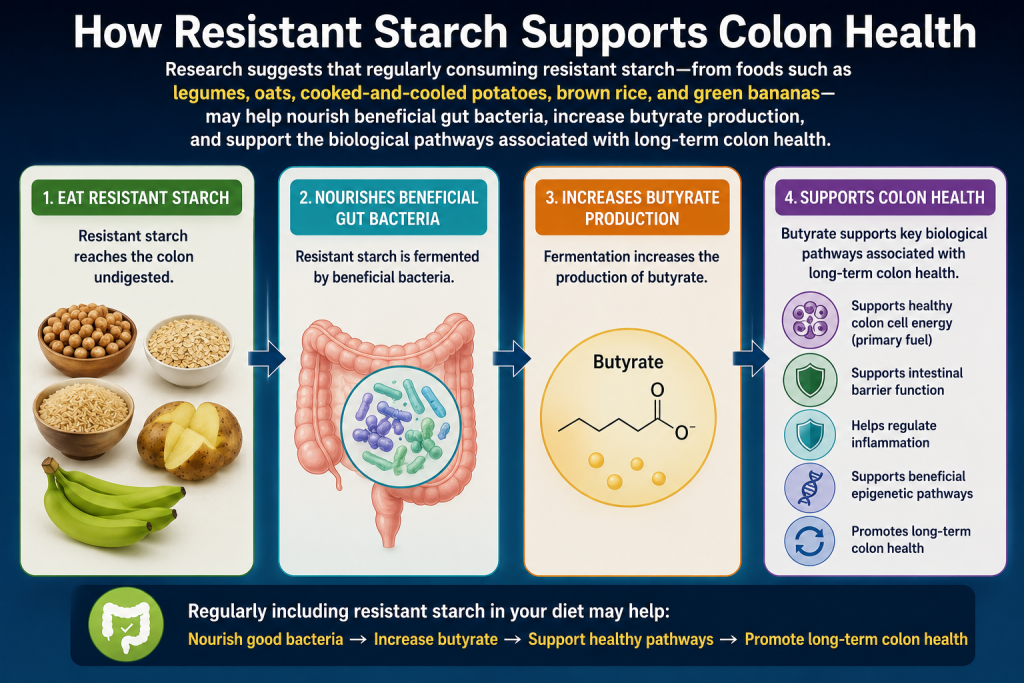
Research suggests that regularly consuming resistant starch—from foods such as legumes, oats, cooked-and-cooled potatoes, brown rice, and green bananas—may help nourish beneficial gut bacteria, increase butyrate production, and support the biological pathways associated with long-term colon health.