Chapter 13 Soluble Fiber as Preventative Medicine
High-fiber and polyphenol-rich dietary patterns have consistently been associated with lower colorectal cancer incidence across epidemiologic, mechanistic, and translational studies. Central to these studies is the role of butyrate as a fuel source and key epigenetic agent. The next step in the development of an effective preventive treatment for colorectal cancer is analyzing how certain fibers or fiber combinations can function in a preventative role.
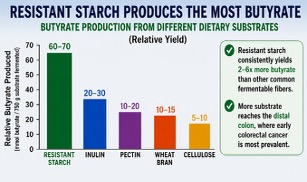
An excellent candidate for use as a possible prophylactic agent is resistant starch, the most powerful butyrate-producer and transport vehicle to the rectosigmoid.
Tap to enlarge. Rotate your phone and pinch to zoom
Several forms of resistant starch exist. Resistant starch type 3 (RS3), produced when cooked starches such as potatoes, rice, oats, or pasta are cooled and undergo retrogradation, is especially effective at supporting butyrate production (McOrist, 2011).
Resistant starch increases butyrate by preferentially supporting several of the colon’s major butyrate-producing organisms, including Faecalibacterium prausnitzii, Roseburia intestinalis, Roseburia hominis, and Eubacterium rectale.
Human Intervention Trials
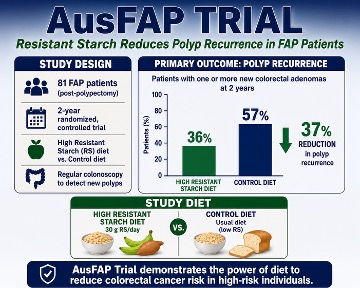
The first human interventional trial using a form of resistant starch (high-amylose maize starch) to reduce colorectal cancer risk was the Australian Polyp Prevention Project, commonly referred to as the AusFAP study. The trial is particularly important because it moved beyond epidemiology and attempted to test whether manipulation of colonic fermentation and microbial metabolism could directly influence carcinogenic processes in humans.
The study focused on patients with Familial Adenomatous Polyposis (FAP), an inherited condition caused primarily by mutations in the APC tumor suppressor gene. Individuals with FAP develop hundreds to thousands of colorectal adenomas and face an extremely high lifetime risk of colorectal cancer. Because adenoma formation occurs rapidly and predictably in FAP, these patients provide a useful model for studying chemoprevention and dietary interventions.
The AusFAP trial investigated whether supplementation with resistant starch could reduce adenoma burden or alter biomarkers associated with colorectal carcinogenesis (Williamson et al, 2006)
Participants in the trial were randomized to receive high-amylose maize starch (a form of resistant starch) or placebo over an extended treatment period. The underlying hypothesis was elegant: if resistant starch could increase butyrate production and shift the colonic ecosystem toward a more saccharolytic metabolic state, this might suppress epithelial proliferation, reduce DNA damage, and decrease adenoma development.
First, resistant starch substantially altered colonic metabolism. Fecal butyrate production increased, luminal fermentation patterns changed, and markers of epithelial biology shifted in directions generally considered protective. These findings demonstrated that dietary substrates could indeed reshape the biochemical environment of the human colon.
Second and perhaps, more importantly, subsequent analyses suggested that resistant starch may preferentially reduce more advanced or high-risk neoplastic lesions rather than simply lowering total polyp counts. Some data indicated reductions in larger adenomas and alterations in proliferation markers within the colonic epithelium. This distinction matters enormously because cancer prevention may depend less on preventing tiny adenomas and more on suppressing progression toward advanced dysplasia and malignant transformation.
Tap to enlarge. Rotatet your phone and pinch to zoom
Third, the trial highlighted the complexity of dietary prevention biology. Resistant starch did not behave like a traditional pharmaceutical agent producing immediate binary effects. Instead, its effects appeared ecological and metabolic, influencing microbial fermentation networks, epithelial energetics, inflammatory tone, and epigenetic signaling. Such processes may require prolonged exposure and may vary considerably among individuals depending on baseline microbiome composition.
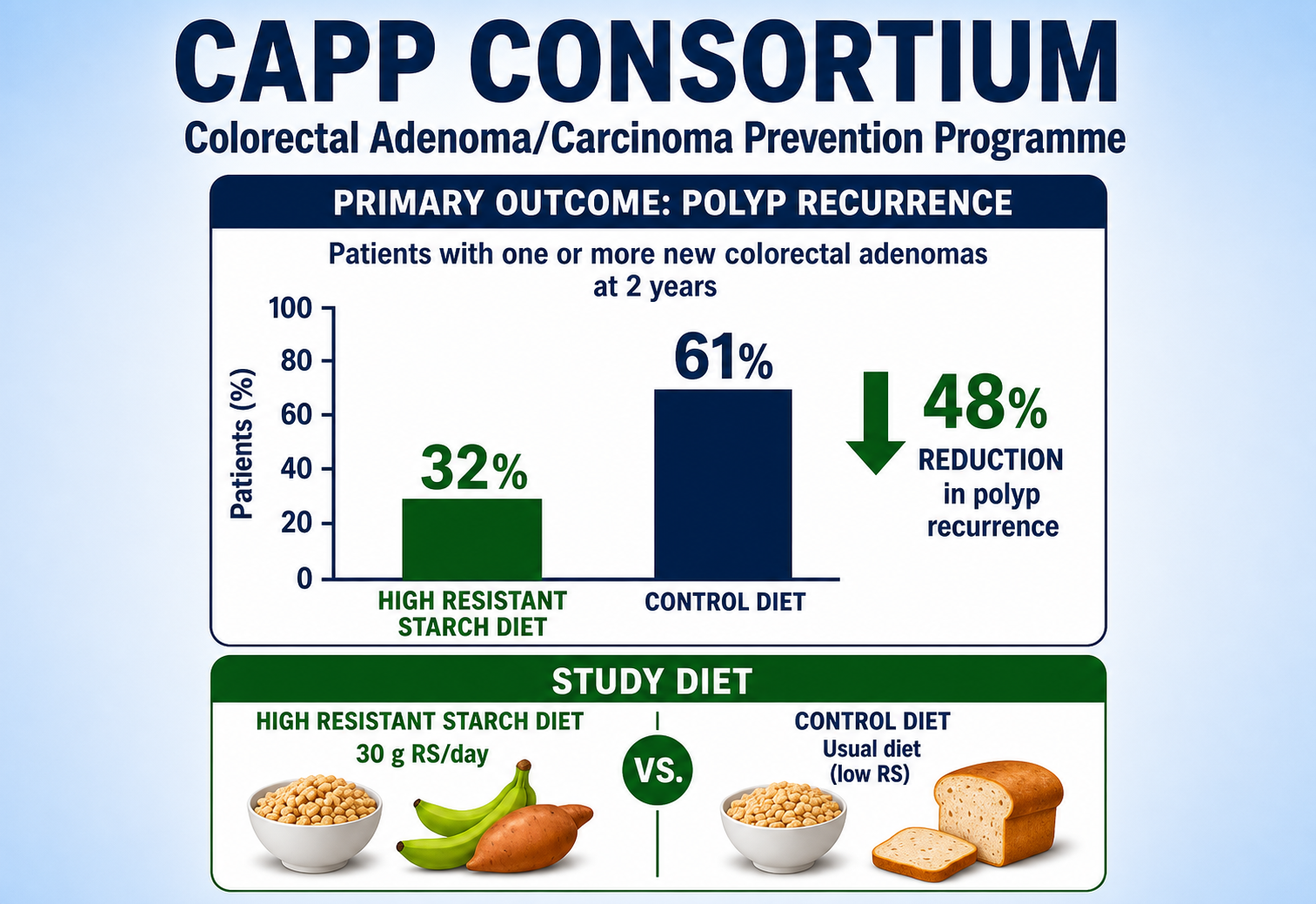
The broader significance of the AusFAP study became even more apparent with the CAPP Consortium which focused on another hereditary colon cancer disease, the Lynch Syndrome. This multicenter study colorectal cancer trial demonstrated striking reductions in extracolonic cancers and delayed cancer incidence associated with resistant starch supplementation in patients with hereditary cancer syndromes, including Lynch Syndrome (Burns 2020).
Tap to enlarge. Rotate your phone and pinch to zoom
In retrospect, the AusFAP trial helped shift the field away from simplistic “fiber as bulk” concepts toward a far more sophisticated understanding of diet–microbiome–metabolite interactions. The trial reinforced the idea that resistant starch functions not merely as roughage, but as a targeted microbial substrate capable of reshaping the epigenetic and metabolic environment of the colon.
Mechanistically, butyrate can reactivate tumor suppressor pathways including p21-mediated cell cycle arrest and apoptosis programs. Experimental work associated with HAMSB (High-Amylose Maize Starch Butyrate) supplementation demonstrated activation of genes involved in programmed cell death within adenomas themselves, suggesting direct epigenetic reprogramming of precancerous tissue (Le Leu,2015).
Delivery System
Resistant Starch
One particularly important concept emerging from these studies is that location matters. The distal colon and rectosigmoid region naturally experience lower butyrate concentrations because fermentable substrate becomes depleted from right to left across the colon. HAMSB (High-Amylose Maize Starch Butyrate) may be especially valuable because it prolongs butyrate delivery into these distal regions where adenomas and early-onset colorectal cancers commonly arise.
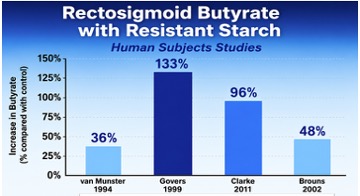
Among all fermentable fibers, resistant starch has emerged as the most effective dietary substrate for increasing butyrate production within the colon. The greatest advantage of resistant starch, however, lies not simply in the quantity of butyrate it produces, but in where that butyrate is produced.
Tap to enlarge. Rotate your phone and pinch to zoom
Mechanistic studies further support this concept of distal fermentation.
Evidence that butyrate reaches the distal colon is supported by studies examining the biological response of human colonocytes. In healthy volunteers, delivery of butyrate to the distal colon altered the expression of numerous genes involved in mitochondrial energy production, oxidative metabolism, fatty acid utilization, and protection against oxidative stress. These observations demonstrate that butyrate is not simply a microbial by-product; it functions as a potent signaling molecule capable of modifying colonocyte metabolism and gene expression precisely where colorectal cancer most commonly develops.
Collectively, these studies suggest that resistant starch serves as more than another source of dietary fiber.
It functions as a highly effective vehicle for transporting butyrate production into the rectosigmoid, maintaining oxidative metabolism, supporting epigenetic stability, suppressing harmful products of proteolytic fermentation, and creating a biological environment that may reduce the risk of colorectal carcinogenesis. Because of these unique properties, resistant starch has become one of the most promising dietary interventions for the prevention of colorectal cancer.
Psyllium
Another soluble fiber of promise as a therapeutic agent for prevention is psyllium. This fiber occupies an interesting position among fermentable fibers because it is fermented much more slowly than highly fermentable fibers such as inulin. Although psyllium produces less total butyrate than resistant starch, its slow fermentation allows a larger proportion of the substrate to escape metabolism in the proximal colon and remain available for microbial fermentation farther downstream.
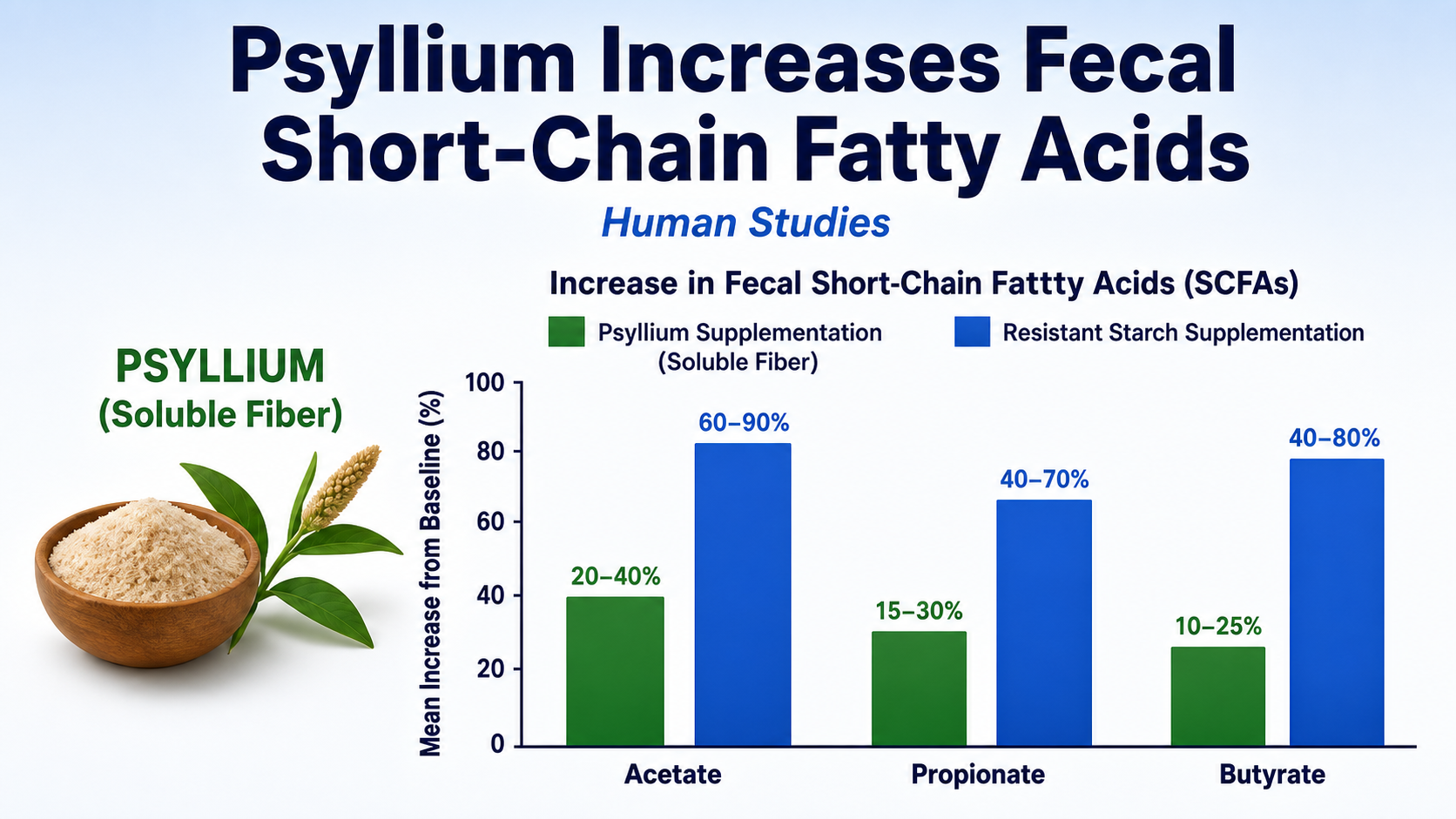
Several human studies have demonstrated that psyllium supplementation increases fecal short-chain fatty acid concentrations, including butyrate, although the increase is generally smaller than that observed with resistant starch (Dimidi et al, Gunn et al.)
Tap to enlarge. Rotate your phone and pinch to zoom
Despite these advantages, psyllium is not the most potent butyrate-producing fiber. Human intervention studies consistently demonstrate that resistant starch produces substantially greater butyrate concentrations and more pronounced distal fermentation.
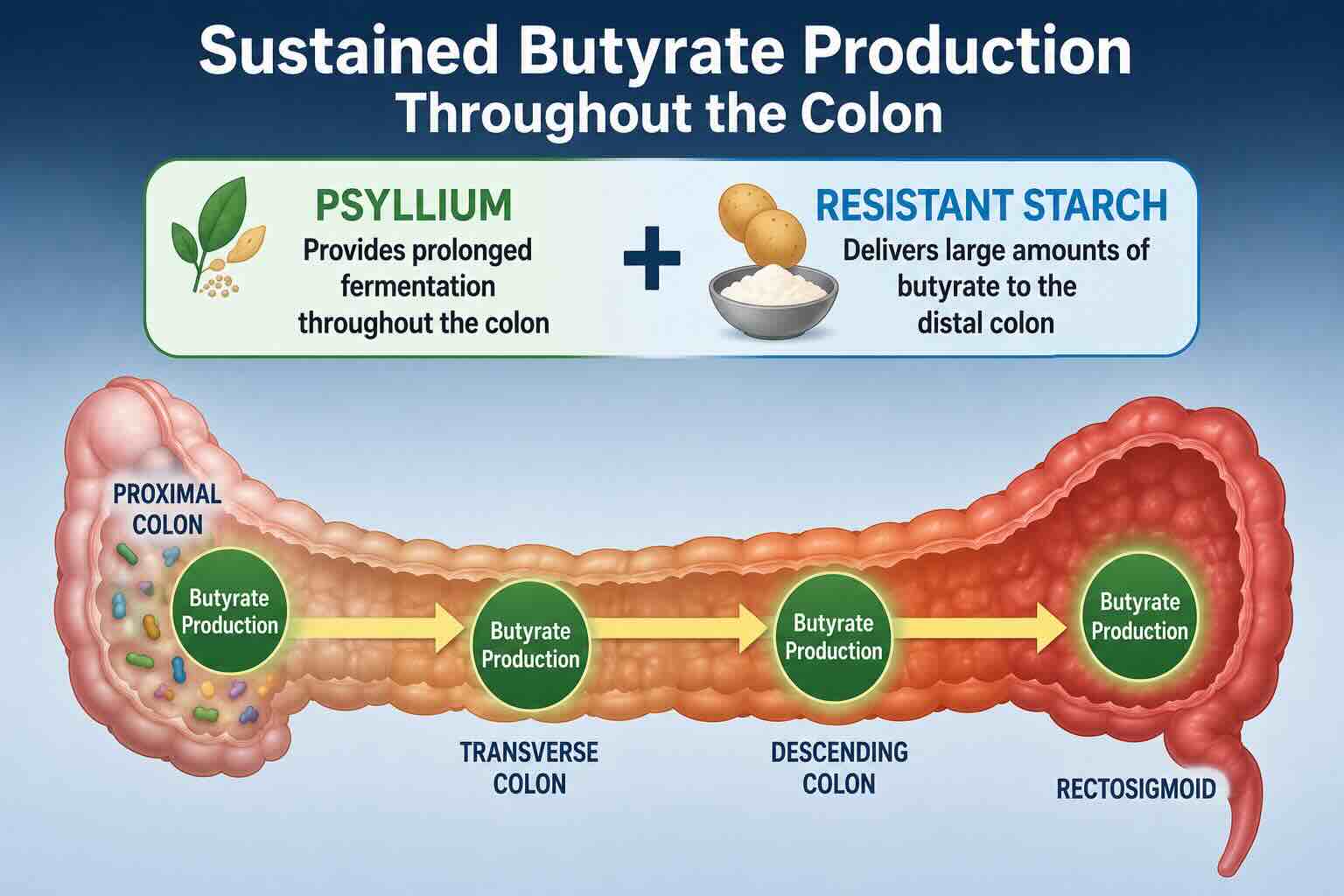
Rather than viewing these fibers as competitors, they should be considered complementary. Psyllium provides prolonged fermentation throughout the colon, whereas resistant starch serves as the most effective dietary vehicle for delivering large amounts of butyrate to the distal colon.
Together, they provide a sustained supply of fermentable substrate that supports continuous microbial production of butyrate from the proximal colon to the rectosigmoid.
Tap to enlarge. Rotate your phone and pinch to zoom
These observations support the concept that combining multiple slowly fermentable fibers may be superior to relying on a single fiber source. Such combinations are more likely to maintain fermentation over the entire length of the colon, maximizing butyrate exposure precisely where protection against colorectal carcinogenesis may be most important.
Collectively, these findings support a larger emerging idea in colorectal cancer prevention: the protective effect of dietary fiber may depend not simply on “fiber intake” itself, but on the successful generation and distal delivery of butyrate.
Conclusion
The intervention studies reviewed in this chapter represent an important transition in colorectal cancer prevention research. Rather than simply observing associations between dietary patterns and cancer risk, they demonstrate that targeted nutritional interventions can modify the biology of the colon itself. Resistant starch consistently alters microbial fermentation, increases butyrate production, and favorably influences epithelial metabolism, proliferation, inflammation, and epigenetic regulation. These effects support the concept that resistant starch functions as a biologically active therapeutic agent rather than merely a source of dietary fiber.
Perhaps the most important lesson from the AusFAP and CAPP studies is that prevention is achieved by changing the colonic ecosystem rather than by attacking individual molecular targets. Resistant starch nourishes a saccharolytic microbiome, enhances production and distal delivery of butyrate, and creates a situation that favors genomic stability over malignant transformation. Although individual responses vary according to microbiome composition and duration of exposure, the cumulative evidence suggests that resistant starch is capable of modifying the biological processes that precede colorectal cancer by many years.
These studies reinforce one of the central themes of this book: food functions as biological information. By selectively feeding beneficial microorganisms, resistant starch changes the metabolites those organisms produce, and those metabolites, particularly butyrate, influence the epigenetic machinery that governs colonocyte behavior. Prevention therefore becomes a process of continuously directing cellular biology toward health rather than waiting to detect disease after it has already developed.
Looking Ahead: Whole Foods
Throughout this book we have examined individual dietary components—soluble fiber, polyphenols, resistant starch, and other bioactive compounds—as though they were separate therapeutic agents. This reductionist approach has been useful for understanding mechanisms, but it is not how humans eat.
Whole foods represent nature’s original delivery system. Beans, oats, lentils, intact grains, fruits, vegetables, nuts, and seeds package resistant starch, multiple forms of soluble fiber, polyphenols, vitamins, minerals, and thousands of phytochemicals into a single biological matrix. These components do not act independently; they interact synergistically to slow digestion, sustain microbial fermentation, optimize butyrate production, moderate nutrient signaling such as mTOR activation, and continuously supply the epigenetic signals that maintain colonocyte health.
The next chapter moves from isolated nutrients to the foods that contain them. Rather than asking which nutrient is most important, we will examine why whole foods consistently outperform purified supplements and how the natural architecture of food coordinates the complex interactions among diet, the microbiome, metabolism, and epigenetics. Ultimately, the goal is not simply to consume more fiber or resistant starch—it is to build a dietary pattern in which every meal becomes an integrated biological signal that promotes long-term colorectal health.
References
- Burn J, Bishop DT, Mecklin JP, Macrae F, Möslein G, Olschwang S, et al. Effect of aspirin or resistant starch on colorectal neoplasia in the Lynch syndrome. N Engl J Med. 2008;359(24):2567-2578.
- Burn J, Sheth H, Elliott F, Reed L, Macrae F, Mecklin JP, et al. Cancer prevention with resistant starch in Lynch syndrome: planned 10-year follow-up of the CAPP2 randomised controlled trial. Cancer Prev Res (Phila). 2020;13(7):623-634.
- Mathers JC, Movahedi M, Macrae F, Mecklin JP, Moeslein G, Olschwang S, et al. Long-term effect of resistant starch on cancer risk in carriers of hereditary colorectal cancer syndromes (CAPP2). Lancet Oncol.
- Williamson SL, Kartheuser A, Coaker J, et al. Randomized trial of high-amylose maize starch in familial adenomatous polyposis (AusFAP Study). Gut.
- Le Leu RK, Winter JM, Christophersen CT, Young GP, Humphreys KJ, Hu Y, et al. Butyrylated resistant starch protects against colorectal cancer development and modifies the colonic microbiota. Carcinogenesis. 2015;36(1):93-100.
- McOrist AL, Miller RB, Bird AR, Keogh JB, Noakes M, Topping DL, Conlon MA. Fecal butyrate levels vary widely among individuals but are usually increased by a diet high in resistant starch. J Nutr. 2011;141(5):883-889.
- Bird AR, Vuaran M, Brown I, Topping DL. Two high-amylose maize starches with different amounts of resistant starch vary in their effects on fermentation, butyrate production, and epithelial biology. J Nutr.
- Deehan EC, Yang C, Perez-Muñoz ME, Nguyen NK, Cheng CC, Triador L, et al. Precision microbiome modulation with discrete dietary fiber structures directs short-chain fatty acid production. Cell Host Microbe. 2020;27(3):389-404.e6.
- Dimidi E, Christodoulides S, Scott SM, Whelan K. Mechanisms of action of psyllium in the gastrointestinal tract and evidence for its clinical use. Microb Ecol Health Dis.
- Gunn D, Abbas Z, Harris HC, Major G, Hoad CL, Gowland P, Marciani L, Gill SK, Rossi M, Remes-Troche JM, Whelan K, Spiller RC. Psyllium reduces inulin-induced colonic gas production in IBS: MRI and in vitro fermentation studies. Gut. 2022;71(5):919-927.
- Boets E, Deroover L, Houben E, Vermeulen K, Gomand SV, Delcour JA, et al. Quantification of in vivo colonic short-chain fatty acid production from inulin. Nutrients. 2015;7(11):8916-8929.
- Donohoe DR, Collins LB, Wali A, Bigler R, Sun W, Bultman SJ. The Warburg effect dictates the mechanism of butyrate-mediated histone acetylation and cell proliferation. Mol Cell. 2012;48(4):612-626.
- Louis P, Hold GL, Flint HJ. The gut microbiota, bacterial metabolites and colorectal cancer. Nat Rev Microbiol. 2014;12(10):661-672.
- Topping DL, Clifton PM. Short-chain fatty acids and human colonic function: roles of resistant starch and nonstarch polysaccharides. Physiol Rev. 2001;81(3):1031-1064.