Chapter 17 The Progressive Biology of the Epigenetic Diet©
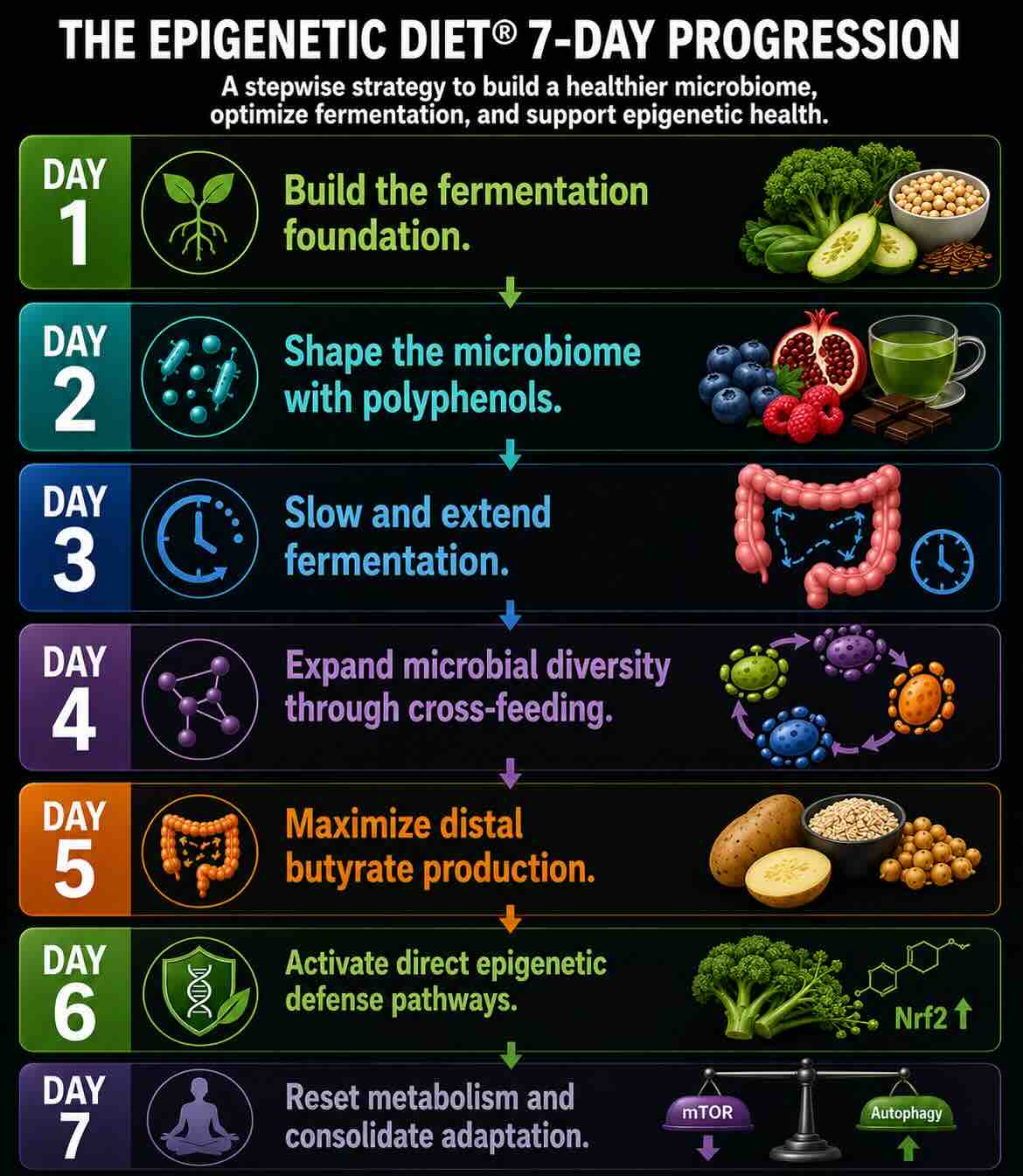
The Epigenetic Diet is intentionally progressive. Each day builds upon the biological adaptations established the day before, gradually transforming the colonic environment from one that merely supports fermentation into one that actively promotes epigenetic stability, cellular resilience, and long-term colorectal health. Rather than repeating the same meals each day, the program introduces successive layers of microbial, metabolic, and epigenetic regulation, with every stage preparing the foundation for the next.
The process begins on Day 1 by establishing the fundamental requirement for a healthy colon: sustained delivery of fermentable fiber. Viscous fibers, resistant starch, and polyphenol-rich foods create a continuous wave of fermentation that extends into the distal colon, where early-onset colorectal cancer most commonly develops. The objective is to provide beneficial microorganisms with a steady supply of substrate while initiating butyrate production and preserving fermentation beyond the proximal colon.
Once this fermentative foundation has been established, Day 2 introduces a second level of regulation through dietary polyphenols. Rather than serving simply as antioxidants, polyphenols function as signaling molecules that reshape the microbial ecosystem itself. Beneficial bacteria metabolize these compounds into highly bioactive molecules while the polyphenols selectively encourage the growth of organisms capable of producing health-promoting metabolites. The microbiome begins to evolve into a more diverse and metabolically capable community.
With microbial diversity expanding, Day 3 focuses on the kinetics of fermentation. The question is no longer simply whether fermentation occurs, but how it occurs. By slowing microbial access to fermentable carbohydrates through viscous fibers and carefully selected substrates, fermentation becomes smoother, more prolonged, and increasingly concentrated within the distal colon.
Tap to enlarge. Rotate your phone and pinch to zoom
This sustained pattern of fermentation provides a more continuous supply of butyrate to the epithelial cells that depend upon it.
Having optimized the timing of fermentation, Day 4 broadens the metabolic capacity of the microbiome by increasing the diversity of dietary polyphenols and fermentable substrates. Multiple bacterial species begin working cooperatively through cross-feeding, in which the metabolic products of one organism become the nutrients for another. This cooperative network enhances microbial resilience, expands butyrate production, and generates a broader spectrum of bioactive metabolites capable of influencing epithelial function.
The next logical step is Day 5, where resistant starch becomes the principal driver of butyrate production. Because resistant starch escapes digestion in the small intestine, it reaches the colon intact and preferentially nourishes many of the microbiome’s most important butyrate-producing organisms. Fermentation is now directed deliberately toward the distal colon, maximizing delivery of butyrate precisely where epithelial vulnerability is greatest.
By Day 6, the emphasis extends beyond microbial metabolism to direct regulation of gene expression. Cruciferous vegetables, particularly broccoli sprouts, provide sulforaphane and related compounds that complement butyrate by inhibiting histone deacetylases and activating the Nrf2 antioxidant response pathway. The microbiome and dietary phytochemicals now work together, influencing many of the same epigenetic pathways that regulate inflammation, cellular differentiation, mitochondrial function, and genomic stability.
The week concludes with Day 7, a period of metabolic recovery designed to consolidate the biological adaptations established during the previous six days. Overall nutrient intake is modest, protein consumption is reduced, and mTOR signaling declines, allowing autophagy, cellular repair, and differentiation to predominate. Importantly, microbial fermentation continues despite the lighter meals, maintaining butyrate production while the host shifts from growth toward maintenance and renewal.
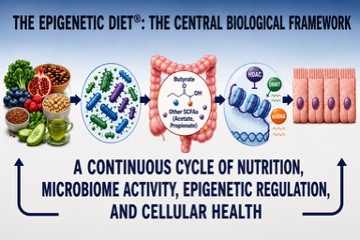
Viewed as a whole, the seven-day program mirrors the central biological framework developed throughout this book. Food first nourishes the microbiome. The microbiome then produces metabolites, particularly butyrate, that function together with dietary bioactive compounds to influence the epigenetic machinery of the colonocyte. Epigenetic regulation ultimately determines cellular phenotype, influencing mitochondrial function, epithelial integrity, inflammation, DNA repair, and the balance between normal differentiation and uncontrolled proliferation.
In this way, the Epigenetic Diet is not simply a meal plan but a practical application of nutritional epigenetics, translating the science of diet–microbiome interactions into a structured program designed to create a healthier, more resilient colon and reduce the long-term risk of colorectal cancer.
Tap to enlarge. Rotate your phone and pinch to zoom.
Conclusion
The seven-day plan is not a series of disconnected meals, but a repeating physiological rhythm—a deliberate orchestration of inputs that shape microbial activity, metabolite flow, and ultimately the epigenetic state of the colonocyte. Each day varies in composition, yet all follow the same internal logic: initiate controlled fermentation in the morning, expand microbial and epigenetic engagement at midday, apply metabolic restraint in the evening, and deliver sustained signaling to the distal colon overnight.
Looking Ahead
The chapters that follow translate these biological principles into practical application. Each day of The Epigenetic Diet© is presented in detail, including the scientific rationale for every meal, the specific foods selected, and the biological objectives they are designed to achieve.
Rather than prescribing a rigid menu, the seven-day program illustrates how dietary choices can be organized to shape the intestinal microbiome in predictable ways. The emphasis is not simply on what to eat, but on when foods are consumed, how they influence fermentation, and why their interactions with the microbiome alter the epigenetic regulation of the colonocyte.
As the week unfolds, the progression becomes evident. Fermentation is established and prolonged, microbial diversity expands, cross-feeding networks mature, resistant starch drives butyrate production toward the distal colon, dietary phytochemicals reinforce epigenetic signaling, and periods of metabolic restraint allow cellular repair pathways to predominate. Each day builds upon the physiological adaptations created by the day before, demonstrating how repeated dietary patterns gradually reshape the biological environment of the colon.
The goal is not short-term dietary perfection, but the creation of a sustainable weekly rhythm that continually reinforces epithelial health. Repeated over months and years, this biological cycle has the potential to maintain butyrate production, preserve epigenetic stability, support mitochondrial function, strengthen barrier integrity, suppress chronic inflammation, and create an intestinal environment that is progressively less favorable for the initiation of colorectal cancer.
The chapters that follow demonstrate how these principles can be incorporated into everyday meals, transforming the science of nutritional epigenetics into a practical, evidence-based strategy for long-term colorectal health.