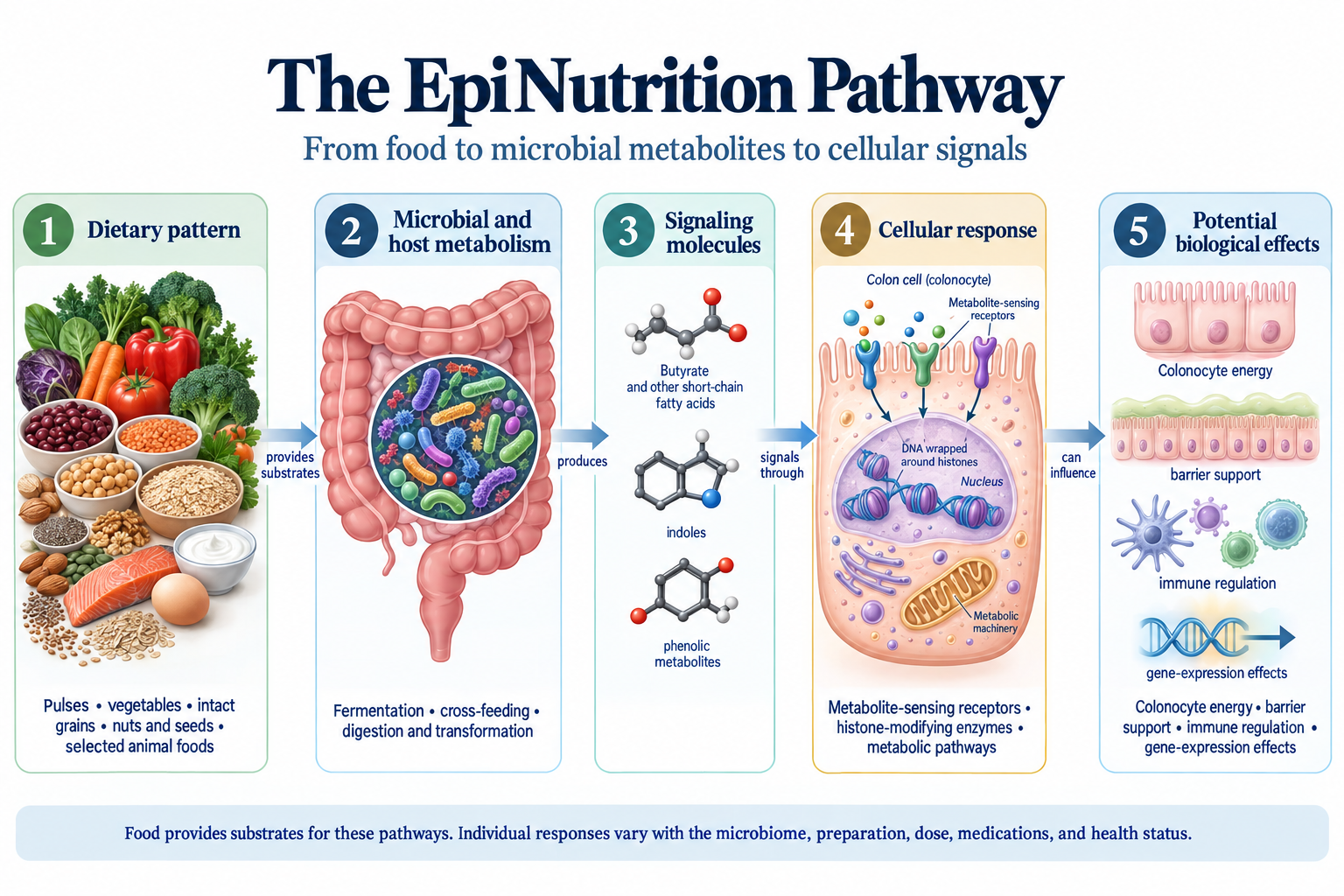
The EpiNutrition meal program begins with a central biological principle: food does more than provide calories. It supplies substrates that intestinal microbes and human cells convert into chemical signals. Those signals can influence metabolism, intestinal-barrier function, immune activity, inflammation, and the regulation of gene expression.
The diet does not alter the sequence of DNA. It can, however, change the molecular environment in which cells interpret DNA. That is the connection between nutrition and epigenetic regulation.
Beans and pulses feed an internal ecosystem
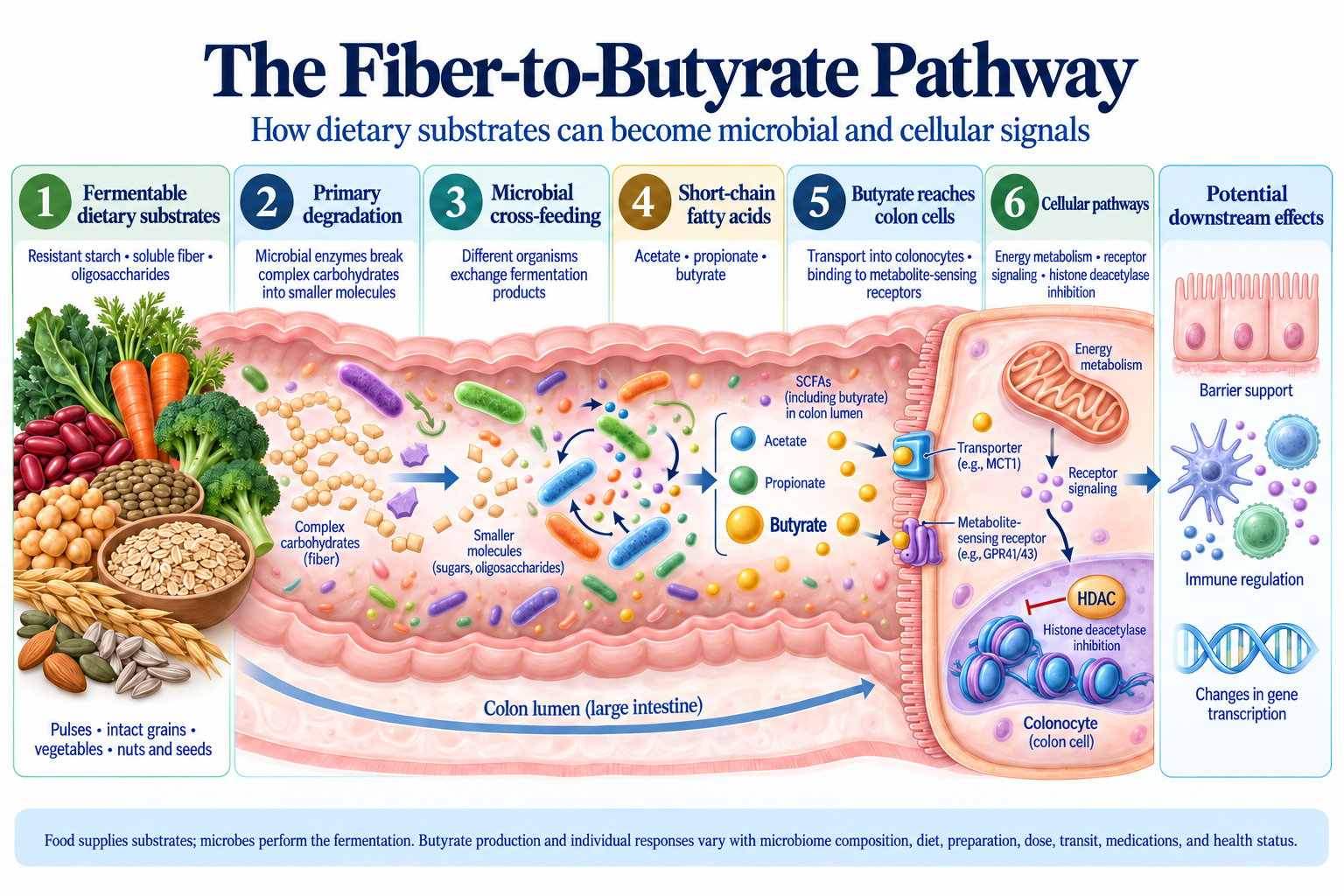
Beans, lentils, chickpeas, peas, and other pulses contain resistant starch, soluble fiber, and fermentable oligosaccharides that are not completely digested in the small intestine. When these carbohydrates reach the colon, intestinal microbes use them as substrates.
Different organisms perform different stages of fermentation. Some break large carbohydrates into smaller compounds. Other organisms consume those compounds in a process called cross-feeding. The resulting metabolites include acetate, propionate, and butyrate.
Beans do not directly produce butyrate. They supply materials from which an appropriately equipped microbial community can produce it. Responses differ among individuals because microbiomes differ. A human resistant-starch study increased average fecal butyrate, but the response varied widely between participants.
Butyrate connects food with cellular regulation
Healthy colonocytes can use butyrate as an important energy source. Butyrate also binds metabolite-sensing receptors, including GPR109A and FFAR2/GPR43, on intestinal and immune cells. These receptors participate in pathways related to epithelial integrity and inflammatory regulation.
Butyrate can also inhibit histone deacetylases. Histones help package DNA, and their acetylation state affects the accessibility of selected genes. A microbial metabolite derived from dietary fiber can therefore influence gene transcription inside human cells.
This does not mean that one serving of beans predictably switches a specific gene on or off. The response depends on the food, dose, microbiome, intestinal environment, medications, and host biology. The important point is that diet supplies raw material for signaling between microbes and human cells.
Why pulses and vegetables belong together
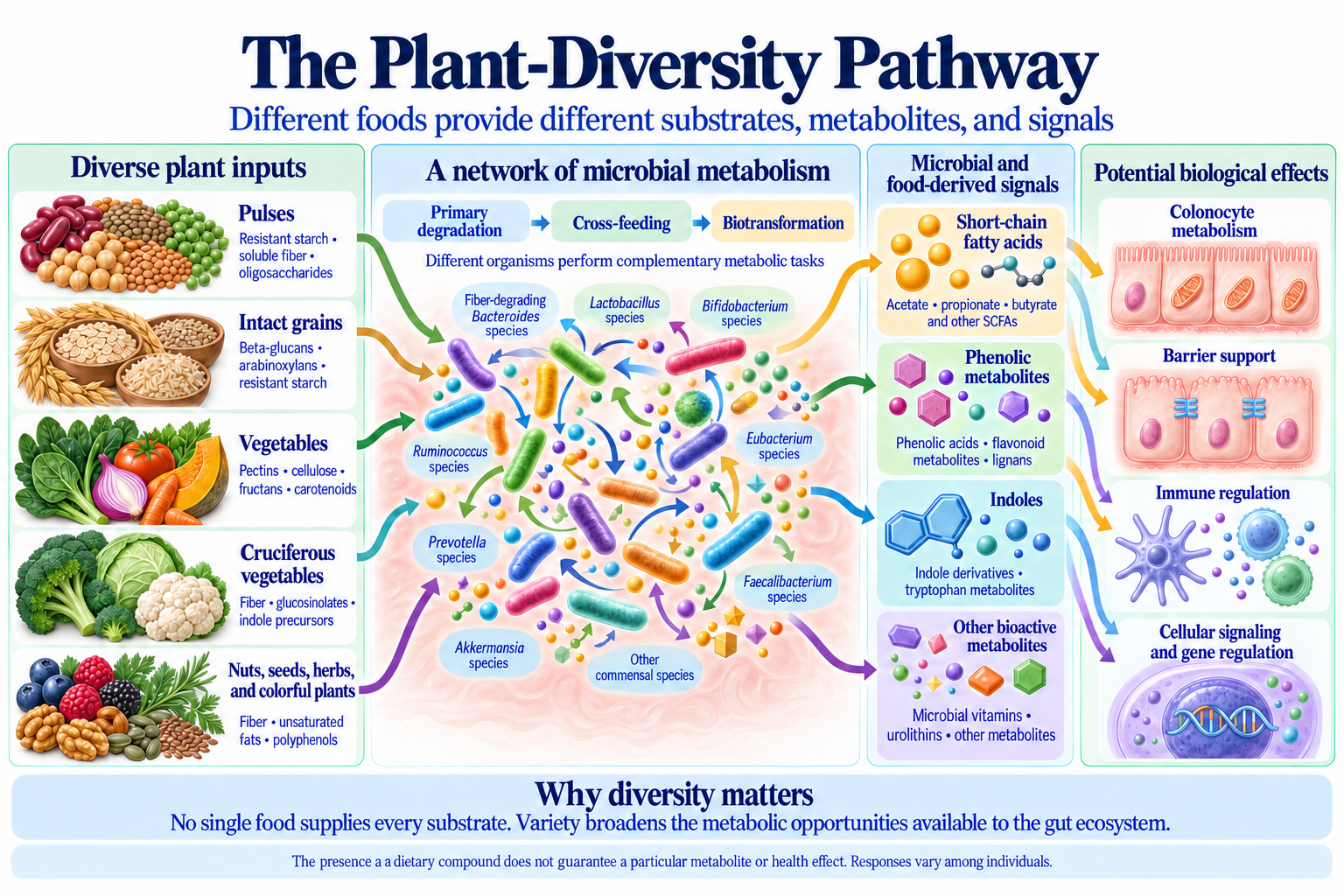
Pulses provide substantial fermentable carbohydrate, but the microbiome should not be fed only one substrate. Vegetables, intact grains, nuts, seeds, herbs, and fruit supply pectins, cellulose, hemicelluloses, beta-glucans, fructans, polyphenols, and other compounds.
Microbial species have different metabolic abilities. A varied plant diet therefore creates more ecological and biochemical opportunities than a diet based on a single fiber or “superfood.” This is why the program rewards plant diversity as well as total fiber.
Colorful plants also contain polyphenols. Many reach the colon attached to the food matrix, where microbes can transform them into smaller metabolites. These compounds may affect microbial ecology, inflammatory signaling, oxidative-stress pathways, and intestinal-barrier function. Cruciferous vegetables add glucosinolates and indole precursors that may engage cellular sensing systems such as the aryl hydrocarbon receptor, although preparation and individual biology affect the response.
Protein and amino-acid complementation
Pulses are valuable sources of protein and contain all essential amino acids, but their proportions are not identical to human requirements. Beans and other pulses are commonly lower in the sulfur-containing amino acids methionine and cysteine. Many grains are relatively lower in lysine but provide more sulfur amino acids. Nuts and seeds make additional contributions.
For that reason, combining pulses with intact grains, seeds, nuts, dairy, eggs, fish, or modest poultry across the day produces a stronger overall essential-amino-acid pattern than relying on several pulses alone. Complementary proteins do not have to be eaten in the same mouthful or even at the same meal when total daily protein and energy intake are adequate.
The program uses this principle deliberately. Lentils are paired with brown rice or farro. Beans are paired with barley or corn. Chickpeas are paired with bulgur, seeds, yogurt, or egg. Selected animal foods serve as complements rather than displacing the plant foundation.
Supporting the intestinal barrier
The intestinal lining must absorb nutrients while limiting the passage of unwanted microbial products. Short-chain fatty acids and plant-derived metabolites can influence colonocyte energy supply, mucus production, tight-junction regulation, epithelial renewal, antimicrobial defenses, and communication between epithelial and immune cells.
Fiber also changes the physical and chemical environment of the colon. It holds water, increases stool bulk, and supplies material for fermentation. Short-chain fatty-acid production lowers luminal pH and helps shape which organisms and metabolic reactions are favored.
The goal is not to eliminate protein fermentation or bile-acid metabolism, which are normal processes. The goal is to ensure that fermentation of diverse plant carbohydrates remains a major feature of the colonic ecosystem.
Why animal protein remains a complement
Fish, eggs, yogurt, and modest amounts of poultry can supply concentrated protein, vitamin B12, iron, zinc, calcium, and long-chain omega-3 fatty acids. The program does not require their exclusion.
Instead, animal protein supports a meal whose structure remains centered on pulses and vegetables. This preserves fermentable substrate and plant diversity while improving nutritional adequacy. It also limits the displacement of plant foods by large portions of red or processed meat, which can change intestinal heme, nitroso-compound, fat, and bile-acid exposures.
Why lunch is the highlight
Lunch carries the greatest food volume, plant diversity, and culinary complexity. It is the easiest place to combine a pulse, an intact grain, several vegetables, herbs, seeds, and an optional animal-protein complement.
Dinner becomes smaller, softer, and simpler. It can reuse lunch ingredients as a vegetable-forward soup, lentil purée, or modest pulse dish. This supports the program’s daily rhythm while preserving the central biological inputs.
The molecular benefits arise mainly from the quality and repetition of the entire dietary pattern, not from the clock alone.
A repeated ecological signal
The microbiome responds to what it is repeatedly fed. One serving may briefly alter fermentation. A sustained pattern creates a more consistent ecological signal.
The intended sequence is:
Dietary pattern → microbial and host metabolism → signaling molecules → receptors and epigenetic enzymes → changes in cell function
This sequence is the molecular foundation of the EpiNutrition meal program. It does not promise identical results in every person. It provides recurring dietary inputs designed to support beneficial microbial metabolism, intestinal integrity, metabolic health, and favorable gene regulation.
Selected scientific sources
- Baxter NT et al. Variable responses of human microbiomes to dietary supplementation with resistant starch. mBio. PMID: 27357127. https://pubmed.ncbi.nlm.nih.gov/27357127/
- Singh N et al. GPR109A is a receptor for the bacterial fermentation product butyrate and functions as a tumor suppressor in colon. Immunity. PMID: 19276343. https://pubmed.ncbi.nlm.nih.gov/19276343/
- Macia L et al. Metabolite-sensing receptors GPR43 and GPR109A facilitate dietary fibre-induced gut homeostasis. Nature Communications. PMID: 25828455. https://pubmed.ncbi.nlm.nih.gov/25828455/
- Li F et al. Human gut bacterial communities are altered by addition of cruciferous vegetables to a controlled diet. Journal of Nutrition. PMID: 19640972. https://pubmed.ncbi.nlm.nih.gov/19640972/
- D’Amico F et al. A polyphenol-rich dietary pattern improves a marker of intestinal permeability in older subjects: the MaPLE randomized controlled trial. PMID: 33388204. https://pubmed.ncbi.nlm.nih.gov/33388204/
- Kuhnle GGC et al. Diet-induced endogenous formation of nitroso compounds in the gastrointestinal tract. PMID: 17761300. https://pubmed.ncbi.nlm.nih.gov/17761300/
- Wan Y et al. Unconjugated and secondary bile-acid profiles in response to diets differing in fat content. PMID: 30876827. https://pubmed.ncbi.nlm.nih.gov/30876827/
This material is educational and describes biological mechanisms and dietary-pattern evidence. It is not an individualized medical prescription.