Chapter 14 Whole-Grain Fiber
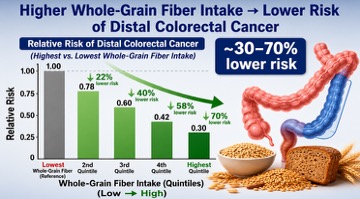
Among all dietary sources of fiber, whole grains consistently demonstrate some of the strongest protective effects against distal colorectal cancer, the region of the colon where early-onset colorectal cancer most commonly develops (Aune et al 2011). Unlike isolated fiber supplements, whole grains provide a complex mixture of fermentable fibers and bioactive phytochemicals that work together to support a healthy colon.
The fermentable carbohydrates within whole grains serve as substrates for the intestinal microbiota, promoting the production of short-chain fatty acids (SCFAs), particularly butyrate, the preferred energy source for colonocytes and an important regulator of epigenetic signaling. Whole grains also contain resistant starch, which escapes digestion in the small intestine and undergoes fermentation primarily in the colon.
In addition to fermentable fiber, whole grains are naturally rich in polyphenols, which possess antioxidant and anti-inflammatory properties while simultaneously shaping the gut microbiome toward a more saccharolytic, butyrate-producing community. They also provide lignans, which are converted by intestinal bacteria into biologically active enterolignans that influence hormone metabolism and may contribute to cancer prevention. Whole grains further supply magnesium, an essential mineral involved in DNA repair, cellular proliferation, and numerous enzymatic reactions, along with phytochemicals that provide additional anti-inflammatory and potential anti-cancer effects.
Whole Food Intervention Study
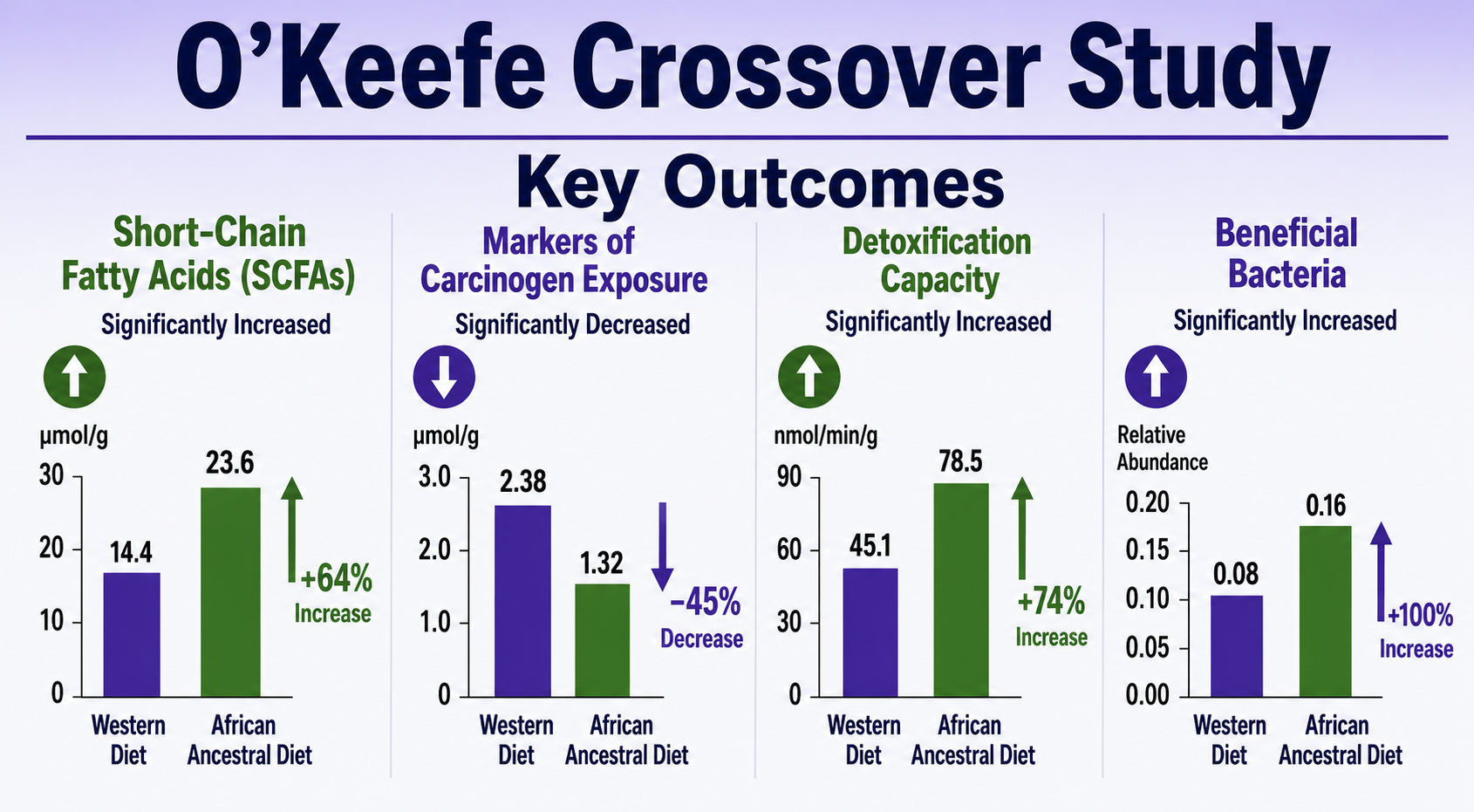
One of the most compelling demonstrations of how rapidly diet can alter the biology of the colon was conducted by Stephen O’Keefe et al: Nature Communications. 2015.
In this landmark intervention study, African Americans consuming a typical Western diet and rural South Africans consuming a traditional high-fiber diet exchanged diets for two weeks. Although the intervention lasted only fourteen days, the metabolic changes within the colon were striking.
Participants who adopted the traditional African diet consumed substantially greater amounts of whole grains, legumes, vegetables, and other fermentable plant foods while markedly reducing dietary fat and animal protein. This dramatic increase in fermentable fiber rapidly shifted the intestinal microbiome toward a more saccharolytic state. Beneficial bacteria increased their fermentation of complex carbohydrates, producing substantially higher concentrations of short-chain fatty acids, particularly butyrate.
The rise in butyrate was accompanied by multiple biological improvements associated with reduced colorectal cancer risk. Colonoscopic biopsies demonstrated lower epithelial proliferation, reduced mucosal inflammation, and favorable changes in gene expression. At the same time, microbial metabolism shifted away from protein fermentation, resulting in lower concentrations of potentially carcinogenic metabolites derived from amino acids and bile acids.
Tap to enlarge. Rotate your phone and pinch to zoom
The opposite pattern occurred in the rural South African participants after they adopted the Western diet. Fiber intake fell sharply, butyrate production declined, and biomarkers associated with colorectal cancer risk increased within only two weeks. The rapidity of these changes demonstrated that the metabolic activity of the microbiome responds almost immediately to dietary composition.
Perhaps the most important lesson from this study is that the microbiome functions as a highly adaptable metabolic organ. Rather than remaining fixed, its metabolic output changes within days according to the nutrients it receives. A diet rich in whole, minimally processed plant foods promotes microbial fermentation and abundant butyrate production, whereas a Western dietary pattern suppresses these protective metabolic pathways.
The O’Keefe study therefore provides direct human evidence supporting the central premise of epigenetic nutrition: food does not merely supply calories—it delivers biological information to the microbiome. The microbiome translates that information into metabolites such as butyrate, which influence epithelial metabolism, regulate epigenetic pathways, and rapidly alter the biological environment of the colon. These findings suggest that meaningful reductions in colorectal cancer risk may begin within days of adopting a high-fiber, whole-food dietary pattern, long before structural changes such as polyps become apparent.
Whole Food Synergy
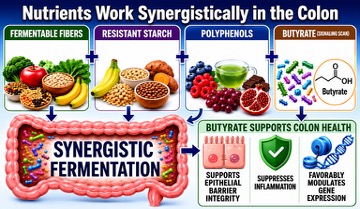
These nutrients do not function independently. Rather, they act synergistically within the colon.
Fermentable fibers nourish beneficial bacteria, resistant starch sustains fermentation into the distal colon, polyphenols enhance microbial diversity and metabolic activity, and the resulting increase in butyrate supports epithelial barrier integrity, suppresses inflammation, and favorably regulates gene expression through epigenetic mechanisms.
This coordinated interaction creates a colonic environment that is considerably less favorable for malignant transformation.
Tap to enlarge. Rotate your phone and pinch to zoom
Whole Food and Protein
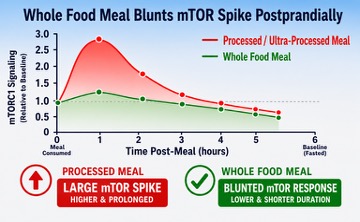
Whole-food meals help moderate mTOR activation in two complementary ways. First, the natural structure of whole foods slows digestion and nutrient absorption. Fiber, intact plant cell walls, and the complex food matrix reduce the rapid rise in circulating amino acids, glucose, and insulin that normally follows highly processed meals. As a result, the postprandial surge in mTOR activity is less abrupt and more physiologically regulated.
mTOR Spike
The whole food diet works particularly well for specific nutrients like leucine-containing red meat. This amino acid is a powerful trigger of mTOR, which sets off a series of epigenetic reactions associate with neoplastic risk. Whole-grain meals slow nutrient absorption and attenuate postprandial insulin responses, mechanisms expected to reduce the magnitude of nutrient-induced mTOR activation
When protein is consumed within a fiber-rich whole-food matrix, amino acid absorption occurs more gradually than when protein is consumed in rapidly digestible or isolated forms (Saxton RA et al 2017).
Tap to enlarge. Rotate your phone and pinch to zoom
Suppression of mTOR pathways
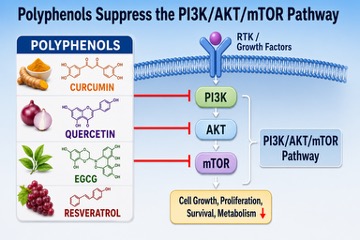
Polyphenols that are abundant throughout the diet influence many of the molecular pathways that regulate mTOR activity before the pathway is fully activated. Rather than acting as direct mTOR inhibitors, polyphenols modify upstream cellular signaling and epigenetic regulatory mechanisms that determine how strongly cells respond to growth-promoting stimuli. At the same time, microbial fermentation of dietary fiber produces butyrate, which functions as a histone deacetylase (HDAC) inhibitor and further reshapes gene expression toward cellular differentiation, mitochondrial function, DNA repair, and metabolic homeostasis. Together, these dietary signals create a cellular environment in which excessive mTOR activation becomes less likely, while normal growth, tissue renewal, and repair remain intact (Bultman SJ 2017).
Tap to enlarge. Rotate your phone and pinch to zoom
The clinical significance of these combined mechanisms is reconfirmed by the earlier review of epidemiology studies showing that individuals consuming the highest amounts of whole-grain fiber consistently demonstrate a substantially lower risk of distal colorectal cancer than those with the lowest intake.
Tap to enlarge. Rotate your phone and pinch to zoom
Conclusion
Whole grains are more than a source of dietary fiber. They deliver a coordinated package of fermentable carbohydrates, resistant starch, polyphenols, lignans, minerals, and phytochemicals that reshape the microbiome, increase butyrate production, favorably regulate epigenetic pathways, and create a distal colonic environment that is substantially less conducive to colorectal carcinogenesis.
Look Ahead
Whole-food meals provide far more than calories and nutrients. They deliver dietary information in a coordinated biological package that shapes nutrient absorption, microbial metabolism, and epigenetic signaling. Yet nutritional composition represents only one dimension of this regulatory system.
An equally important question is when these signals are delivered.
Emerging research demonstrates that nutrient sensing, mTOR activity, microbial fermentation, epithelial repair, and many epigenetic processes follow circadian rhythms that fluctuate over the course of the day. The same meal may produce different metabolic and molecular responses depending on the timing of its consumption. Likewise, patterns such as prolonged grazing, late-night eating, or extended fasting alter the temporal relationship between nutrient delivery, microbial fermentation, and epithelial recovery.
The next chapter examines meal timing as an epigenetic intervention, exploring how synchronizing food intake with the body’s natural biological rhythms may further stabilize microbial metabolism, optimize butyrate production, moderate excessive mTOR activation, and create an intestinal condition that is less favorable for colorectal carcinogenesis.
References
- O’Keefe SJD, Li JV, Lahti L, Ou J, Carbonero F, Mohammed K, et al. Fat, fibre and cancer risk in African Americans and rural Africans. Nat Commun. 2015;6:6342.
- Aune D, Chan DSM, Lau R, Vieira R, Greenwood DC, Kampman E, Norat T. Dietary fibre, whole grains, and risk of colorectal cancer: systematic review and dose-response meta-analysis of prospective studies. BMJ. 2011;343:d6617.
- Reynolds A, Mann J, Cummings JH, Winter N, Mete E, Te Morenga L. Carbohydrate quality and human health: systematic review and meta-analysis. Lancet. 2019;393:434-445.
- World Cancer Research Fund/American Institute for Cancer Research. Diet, Nutrition, Physical Activity and Colorectal Cancer. Continuous Update Project Expert Report. London: WCRF/AICR; 2018.
- Makarem N, Nicholson JM, Bandera EV, McKeown NM, Parekh N. Consumption of whole grains and risk of cancer: systematic review and meta-analysis. Nutr Rev. 2020;78:890-906.
- Louis P, Flint HJ. Formation of propionate and butyrate by the human colonic microbiota. Environ Microbiol. 2017;19:29-41.
- Koh A, De Vadder F, Kovatcheva-Datchary P, Bäckhed F. From dietary fiber to host physiology: short-chain fatty acids as key bacterial metabolites. Cell. 2016;165:1332-1345.
- Bultman SJ. Interplay between diet, gut microbiota, epigenetic events, and colorectal cancer. Mol Nutr Food Res. 2017;61:1500902.
- Graf D, Di Cagno R, Fåk F, Flint HJ, Nyman M, Saarela M, et al. Contribution of diet to the composition of the human gut microbiota. Microb Ecol Health Dis. 2015;26:26164.
- Martínez I, Lattimer JM, Hubach KL, Case JA, Yang J, Weber CG, et al. Gut microbiome composition is linked to whole grain-induced immunological improvements. ISME J. 2013;7:269-280.
- Slavin JL. Whole grains and human health. Nutr Res Rev. 2004;17:99-110.
- McRae MP. Dietary fiber intake and type 2 diabetes mellitus: systematic review and meta-analysis. J Chiropr Med. 2018;17:44-53. (General fiber physiology—not essential but useful background.)
- Giovannucci E. Insulin, insulin-like growth factors and colon cancer: a review of the evidence. J Nutr. 2001;131(Suppl):3109S-3120S.
- Saxton RA, Sabatini DM. mTOR signaling in growth, metabolism and disease. Cell. 2017;168:960-976.
- Cummings JH, Stephen AM. Carbohydrate terminology and classification. Eur J Clin Nutr. 2007;61(Suppl 1):S5-S18.