Chapter 18 The Epigenetic Diet© 7-Day Plan
Day 1: Building the Foundation for Distal Fermentation and Butyrate Production
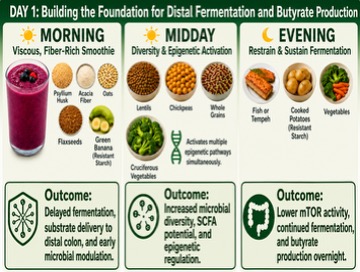
The first day establishes the biological foundation for the entire Epigenetic Diet. Rather than simply increasing fiber intake, each meal is designed to deliver fermentable substrates to progressively more distal regions of the colon while simultaneously providing epigenetic signals that favor a healthy colonocyte phenotype.
The morning begins with a viscous, fiber-rich smoothie containing psyllium, acacia fiber, oats, flaxseed, and green banana resistant starch. Together these fibers create a gel-like matrix that slows microbial access to fermentable carbohydrates. Instead of being consumed rapidly in the proximal colon, fermentation is extended over time, preserving substrate for delivery farther into the distal colon. Polyphenol-rich berries and green tea provide the day’s first epigenetic signals while also helping shape a healthier microbial community. The overall goal of breakfast is to initiate sustained fermentation while beginning microbial modulation.
By midday, the emphasis shifts toward expanding microbial diversity and activating multiple protective signaling pathways. Lentils, chickpeas, whole grains, and cruciferous vegetables provide a broad spectrum of fermentable fibers, resistant starch, and phytochemicals. These foods nourish numerous bacterial species simultaneously, increasing production of short-chain fatty acids while exposing colonocytes to a diverse array of epigenetic compounds. Rather than stimulating a single pathway, this meal activates multiple complementary mechanisms that regulate inflammation, cellular metabolism, differentiation, and epithelial repair.
The evening meal deliberately changes strategy. Instead of maximizing nutrient intake, it is designed to sustain fermentation while limiting prolonged nutrient signaling. A modest serving of fish or tempeh supplies adequate protein without excessive activation of the mTOR pathway. Cooked and cooled potatoes provide resistant starch that continues to ferment during the overnight hours, while vegetables contribute additional fermentable substrate and polyphenols. As amino acid concentrations gradually decline during the evening, mTOR activity falls and microbial fermentation continues, allowing butyrate production to extend toward the rectosigmoid colon when nutrient delivery from earlier meals would otherwise be exhausted.
Tap to enlarge. Rotate your phone and pinch to zoom.
Viewed together, the three meals function as a coordinated biological system rather than independent dietary choices. Breakfast establishes delayed fermentation, lunch broadens microbial diversity and epigenetic signaling, and dinner sustains microbial metabolism into the overnight fasting period. The result is a continuous wave of fermentation that increases butyrate delivery to the distal colon while creating an epigenetic environment that supports mitochondrial function, epithelial integrity, controlled cellular proliferation, and long-term colorectal health. This integrated pattern becomes the template upon which the remaining days of the Epigenetic Diet are built.
Day 2: Polyphenol–Microbiome Interactions
Having established sustained fermentation on Day 1, the next objective is to reshape the microbiome itself
The second day shifts the emphasis from establishing fermentation to strengthening the metabolic partnership between dietary polyphenols and the intestinal microbiome. While fermentable fibers provide the fuel for bacterial metabolism, polyphenols function as biological signaling molecules that reshape microbial composition, enhance metabolic capacity, and influence gene expression within the colon. Throughout the day, foods are selected not only for their nutrient content but also for their ability to promote beneficial microbial populations and generate health-promoting metabolites.
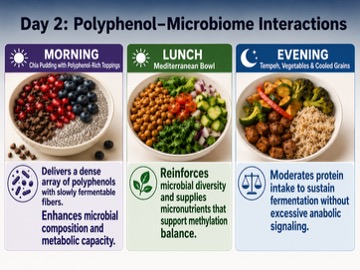
The morning begins with a chia seed pudding topped with a variety of polyphenol-rich fruits and cocoa. Berries provide anthocyanins, pomegranates contribute ellagitannins, and cocoa supplies flavanols, while chia seeds add soluble fiber that supports fermentation. Together these foods deliver a diverse mixture of polyphenols that survive digestion and reach the colon, where they interact with the microbiome. Beneficial bacteria convert these compounds into smaller bioactive metabolites while the soluble fiber enhances microbial growth and metabolic activity. The result is improved microbial diversity and the initiation of multiple protective signaling pathways.
Lunch expands both microbial diversity and nutritional complexity through a Mediterranean-style bowl containing lentils, leafy greens, olive oil, and colorful vegetables. Lentils contribute resistant starch and fermentable fiber that sustain butyrate production, while vegetables and greens provide an additional spectrum of polyphenols, vitamins, minerals, and methyl-donor nutrients such as folate. Olive oil contributes monounsaturated fats and additional phenolic compounds. Together these foods reinforce microbial diversity while supplying many of the nutritional cofactors required for normal epigenetic regulation, including DNA methylation and chromatin remodeling.
The evening meal continues microbial support while avoiding excessive anabolic stimulation. Tempeh provides a moderate amount of plant protein together with naturally fermented bioactive compounds. Vegetables contribute additional polyphenols and micronutrients, while cooled whole grains supply resistant starch that continues to ferment into the overnight hours. By moderating protein intake and maintaining a steady supply of fermentable substrate, the evening meal supports ongoing microbial metabolism without prolonged activation of mTOR signaling.
Tap to enlarge. Rotate your phone and pinch to zoom.
The central concept illustrated in this slide is that polyphenols do not act independently of the microbiome. Instead, they participate in a continuous cycle of reciprocal interaction. Dietary polyphenols reach the colon where intestinal bacteria transform them into highly bioactive metabolites such as urolithins, equol, and smaller phenolic acids. These metabolites improve epithelial barrier integrity, reduce inflammation, and influence epigenetic pathways regulating cellular metabolism and differentiation. At the same time, polyphenols selectively encourage the growth of beneficial bacterial species, further enhancing the microbiome’s capacity to metabolize future polyphenol intake.
By the end of Day 2, the dietary strategy has evolved beyond simply producing butyrate. The microbiome itself has become more diverse and metabolically capable, creating a self-reinforcing cycle in which fiber fuels bacterial growth, polyphenols shape microbial composition, microbial metabolism generates new bioactive compounds, and these metabolites promote healthier colonocyte function. This reciprocal relationship between diet, microbes, and epigenetic regulation represents one of the central biological principles of the Epigenetic Diet.
Day 3: Fermentation Kinetics
With microbial diversity expanding, attention now shifts to controlling the rate of fermentation.
The third day introduces one of the central concepts of the Epigenetic Diet: fermentation kinetics. The health benefits of dietary fiber depend not only on how much fiber is consumed, but also on how quickly it is fermented. Rapid fermentation in the proximal colon can exhaust microbial substrate long before it reaches the distal colon, where early-onset colorectal cancer most commonly develops. Day 3 therefore focuses on slowing microbial access to fermentable carbohydrates, creating a sustained wave of fermentation that extends butyrate production farther into the rectosigmoid colon.
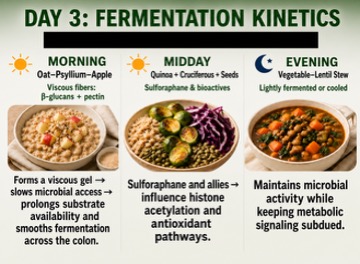
The morning meal combines oats, psyllium, apples, and flaxseed to form a highly viscous fiber matrix rich in β-glucans and pectin. Rather than allowing bacteria immediate access to fermentable carbohydrate, this gel-like structure slows substrate diffusion and microbial digestion. The result is a more gradual pattern of fermentation that prolongs substrate availability while avoiding the rapid proximal fermentation seen with many rapidly fermentable fibers. Instead of producing a short burst of short-chain fatty acids, the goal is to generate a smoother and more sustained release throughout the length of the colon.
Lunch builds upon this strategy by introducing quinoa, cruciferous vegetables, seeds, and other fiber-rich plant foods that contain both fermentable carbohydrate and potent bioactive compounds. Cruciferous vegetables provide sulforaphane and related isothiocyanates, compounds known to influence histone acetylation, antioxidant defense pathways, and cellular detoxification. These epigenetic signals complement the ongoing production of butyrate, allowing multiple protective pathways to operate simultaneously. The combination of slowly fermentable fibers and bioactive phytochemicals reinforces microbial diversity while strengthening epithelial resilience.
Tap to enlarge. Rotate your phone and pinch to zoom.
The evening meal continues the emphasis on sustained fermentation with a vegetable and lentil stew. Lentils provide resistant starch and slowly fermentable fiber, while the vegetables contribute additional polyphenols and micronutrients. Because this meal contains only moderate amounts of protein, nutrient-sensing pathways such as mTOR remain relatively subdued, allowing microbial fermentation to continue into the overnight hours. The objective is not simply to produce more short-chain fatty acids, but to extend their production into the distal colon, where butyrate availability is often lowest and epithelial vulnerability is greatest.
Immediately after meals, substrate availability is highest in the proximal colon, where microbial access begins. As viscous fibers gradually release fermentable carbohydrate, substrate persists farther along the colon instead of being consumed immediately. Microbial activity and butyrate production therefore shift distally over time, creating a prolonged wave of fermentation that ultimately increases butyrate delivery to the rectosigmoid region. Rather than a sharp peak followed by depletion, fermentation becomes slower, smoother, and more evenly distributed.
By the end of Day 3, the dietary strategy has evolved from simply providing fiber to engineering the timing of fermentation itself. Viscous fibers regulate microbial access to substrate, slowly fermentable carbohydrates extend fermentation throughout the colon, and bioactive compounds such as sulforaphane complement butyrate by activating additional epigenetic pathways. Together, these mechanisms maximize butyrate delivery where it is needed most while optimizing host–microbiome communication and creating an environment that supports epithelial integrity, metabolic health, and long-term colorectal cancer prevention.
Day 4: Expanding Polyphenol Diversity
Once fermentation has become sustained, increasing the diversity of microbial substrates further broadens metabolic capacity.
The fourth day builds upon the microbial foundation established during the previous three days by emphasizing polyphenol diversity. While Day 2 introduced the importance of polyphenols as microbial signaling molecules, Day 4 broadens the spectrum of these compounds to encourage a richer, more metabolically versatile microbiome. The objective is not to consume large amounts of a single polyphenol but to expose the intestinal ecosystem to a wide variety of plant-derived compounds that work together to enhance microbial diversity, strengthen fermentation, and reinforce epigenetic regulation.
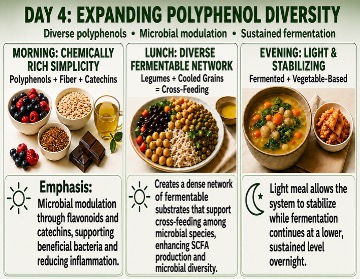
The morning meal provides a concentrated mixture of chemically distinct polyphenols paired with fermentable fiber. Berries supply anthocyanins and ellagitannins, flaxseed contributes lignans, oats provide avenanthramides together with β-glucans, dark chocolate adds flavanols, and green tea delivers catechins, particularly epigallocatechin gallate (EGCG). These compounds possess different chemical structures and biological activities, allowing them to interact with diverse bacterial species throughout the colon. Soluble fibers simultaneously provide fermentable substrate, ensuring that microbial populations have both the fuel and the signaling molecules needed to expand their metabolic capacity.
Tap to enlarge. Rotate your phone and pinch to zoom
Lunch increases microbial diversity by combining multiple legumes, cooled whole grains, colorful vegetables, herbs, and olive oil. Each legume contributes a unique mixture of fermentable fibers and resistant starch, while the cooled grains provide additional slowly fermentable substrate that supports distal butyrate production. Herbs, vegetables, and olive oil contribute hundreds of additional phytochemicals that broaden microbial exposure to plant bioactives. This dietary diversity encourages microbial cross-feeding, in which one bacterial species metabolizes dietary compounds into intermediate products that become substrates for neighboring organisms. As a result, fermentation becomes more efficient, microbial diversity expands, and production of short-chain fatty acids, particularly butyrate, is enhanced.
The evening meal shifts toward stabilization rather than stimulation. A vegetable-based fermented stew provides soluble fiber, polyphenols, and modest amounts of naturally fermented foods such as kimchi, sauerkraut, or miso. These foods introduce additional microbial metabolites while maintaining an environment favorable for continued fermentation. The light evening meal minimizes prolonged activation of nutrient-sensing pathways while allowing fermentation to continue steadily into the overnight fasting period.
The biological principle illustrated in this slide is that polyphenols and the microbiome exist in a reciprocal relationship. Most dietary polyphenols are only partially absorbed in the small intestine and therefore reach the colon, where they are transformed by intestinal bacteria into smaller, highly bioactive metabolites. At the same time, these polyphenols selectively promote the growth of beneficial microbial species while suppressing organisms associated with inflammation and dysbiosis. The result is increased production of butyrate and other short-chain fatty acids, improved epithelial barrier function, and enhanced regulation of inflammatory and epigenetic pathways.
By the end of Day 4, the microbiome has been exposed to an exceptionally broad array of fermentable fibers and phytochemicals. This diversity promotes greater microbial resilience, expands metabolic capacity through cross-feeding, and sustains fermentation farther into the distal colon. Rather than relying on isolated “superfoods,” the Epigenetic Diet demonstrates that dietary diversity itself is a powerful biological intervention, creating a more stable microbial ecosystem capable of producing a wider range of protective metabolites that support long-term colorectal health.
Day 5: Resistant Starch as a Primary Driver of Butyrate Production
The next logical step is directing that fermentation farther into the distal colon.
Day 5 illustrates why resistant starch differs fundamentally from other carbohydrates. Unlike digestible starch, resistant starch escapes digestion in the small intestine and becomes a preferred substrate for butyrate-producing bacteria
The objective of Day 5 is to maximize butyrate production while maintaining moderate nutrient signaling and preserving the metabolic environment established during the previous four days.
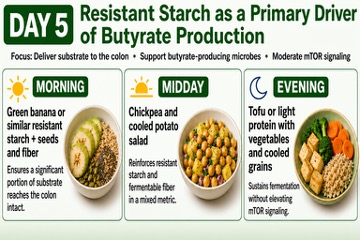
The morning meal begins with green banana, seeds, and other fiber-rich foods. Green bananas are particularly rich in resistant starch, which resists enzymatic digestion and passes through the small intestine largely unchanged. Seeds contribute additional fermentable fiber that slows intestinal transit and supports gradual microbial access to substrate. Together these foods ensure that a substantial portion of fermentable carbohydrate reaches the colon intact, where it can sustain microbial metabolism beyond the proximal colon.
Lunch reinforces this strategy with chickpeas and cooled potatoes served alongside a mixed salad. Cooking and cooling potatoes promotes retrogradation, converting digestible starch into resistant starch type 3 (RS3), one of the most effective dietary sources for stimulating butyrate production. Chickpeas provide both resistant starch and slowly fermentable fiber, broadening the range of microbial substrates available for fermentation. This combination encourages the growth of beneficial butyrate-producing organisms, including Faecalibacterium prausnitzii, Roseburia species, and Eubacterium rectale, thereby increasing production of short-chain fatty acids throughout the colon.
The evening meal continues sustained fermentation while avoiding excessive anabolic signaling. Tofu or another moderate plant protein is paired with vegetables and cooled grains, providing additional resistant starch together with soluble fiber and polyphenols. Protein intake remains moderate, limiting prolonged activation of mTOR while allowing microbial fermentation to continue into the overnight fasting period. The result is continued butyrate production at a time when substrate availability in the distal colon would otherwise begin to decline.
Tap to enlarge. Rotate your phone and pinch to zoom.
The central pathway illustrated in this slide highlights the unique biological journey of resistant starch. Because it escapes digestion in the small intestine, resistant starch reaches the colon intact, where it serves as fuel for beneficial microbes. These organisms ferment resistant starch into short-chain fatty acids, particularly butyrate, which becomes the preferred energy source for healthy colonocytes. Butyrate strengthens epithelial barrier integrity, suppresses inflammation, supports normal cellular differentiation, and functions as a powerful epigenetic regulator through histone deacetylase inhibition. In this way, resistant starch functions not simply as a carbohydrate but as a delivery system for one of the colon’s most important protective metabolites.
The key dietary principles of Day 5 emphasize practical implementation. Foods naturally rich in resistant starch—including green bananas, cooled potatoes, cooled rice, cooled whole grains, and legumes—should be consumed regularly and combined with soluble fibers to slow digestion and optimize microbial fermentation. Moderate portions of protein, particularly from plant sources, help sustain fermentation without excessive activation of nutrient-sensing pathways such as mTOR.
By the end of Day 5, the dietary strategy has become increasingly targeted. The goal is no longer simply to provide fiber, but to deliver fermentable substrate precisely where it is needed most. Resistant starch extends microbial activity into the distal colon, selectively nourishes butyrate-producing bacteria, and generates sustained butyrate production that supports epithelial metabolism, reinforces epigenetic regulation, and strengthens the biological defenses against colorectal carcinogenesis.
Day 6: Cruciferous Vegetables and Direct Epigenetic Modulation
After optimizing microbial metabolism, the diet now emphasizes foods that directly influence epigenetic regulation.
The sixth day shifts the focus from providing microbial substrates to directly influencing the epigenetic machinery of the colonocyte. While fermentation and butyrate production remain essential, this day’s meals emphasize cruciferous vegetables, particularly broccoli sprouts, which are among the richest dietary sources of sulforaphane. Sulforaphane complements butyrate by acting on many of the same epigenetic pathways while simultaneously activating powerful cellular defense systems. Together, these compounds reinforce the molecular environment that protects against malignant transformation.
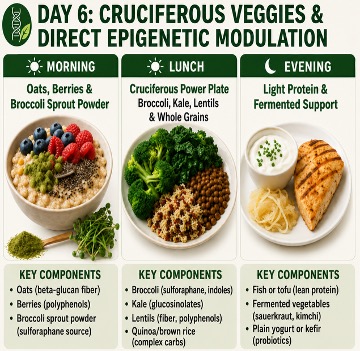
The morning begins with oats, berries, and broccoli sprout powder. Oats provide β-glucans that continue to support sustained microbial fermentation, while berries contribute anthocyanins and other polyphenols that promote microbial diversity and reduce oxidative stress. Broccoli sprouts supply exceptionally high concentrations of glucoraphanin, the precursor to sulforaphane. As sulforaphane is released, it begins activating cellular defense pathways even before fermentation-derived metabolites reach peak production later in the day. Breakfast therefore combines microbial nourishment with direct epigenetic signaling.
Tap to enlarge. Rotate your phone and pinch to zoom.
Lunch delivers the highest concentration of cruciferous vegetables in the daily cycle. Broccoli, kale, Brussels sprouts, and other crucifers are paired with lentils and whole grains to provide a combination of fermentable fiber, resistant starch, and bioactive phytochemicals. Lentils and grains maintain butyrate production through ongoing microbial fermentation, while sulforaphane and related isothiocyanates act directly within colonocytes. These compounds inhibit histone deacetylases (HDACs), activate the Nrf2 antioxidant response pathway, and stimulate the expression of genes involved in detoxification, antioxidant defense, DNA repair, and cellular resilience. Rather than acting independently, butyrate and sulforaphane reinforce one another, providing complementary epigenetic regulation through multiple molecular mechanisms.
The evening meal is intentionally light, consisting of a moderate portion of fish or tofu accompanied by fermented foods such as sauerkraut, kimchi, kefir, or plain yogurt. Fermented foods contribute microbial metabolites and support microbial diversity, while the modest protein intake minimizes prolonged activation of nutrient-sensing pathways such as mTOR. This strategy allows microbial fermentation to continue into the overnight period while maintaining the epigenetic signals initiated earlier in the day.
The biochemical pathway illustrated on this slide highlights one of sulforaphane’s most important mechanisms of action. After absorption, sulforaphane enters cells where it inhibits histone deacetylases and activates the transcription factor Nrf2. Nrf2 then translocates to the nucleus, where it stimulates expression of numerous antioxidant and detoxification genes that protect cells against oxidative injury and environmental stress. These actions complement the effects of butyrate, which also functions as an HDAC inhibitor, creating a coordinated epigenetic response that promotes cellular differentiation, suppresses inflammation, enhances mitochondrial function, and supports normal epithelial turnover.
By the sixth day, the dietary strategy has progressed well beyond supplying nutrients. The meals now function as a coordinated system of epigenetic modulation, combining microbial metabolites with dietary signaling molecules that directly regulate gene expression. Sustained butyrate production, together with sulforaphane-induced activation of antioxidant and detoxification pathways, creates an intracellular environment that favors genomic stability, epithelial integrity, and controlled cellular growth. Day 6 demonstrates that foods can influence health not only by providing energy, but by actively directing the molecular programs that determine how colon cells respond to their environment.
Day 7: Metabolic Reset
The final day recognizes that optimal biology depends not only on stimulation but also on recovery.
The seventh day completes the weekly cycle by providing a period of metabolic recovery. After six days of continuously supplying fermentable substrates, polyphenols, resistant starch, and direct epigenetic signals, the focus shifts toward lowering overall metabolic load while maintaining microbial activity. Rather than maximizing nutrient intake, Day 7 is designed to reduce nutrient-sensing signals—particularly mTOR activation—while allowing repair, differentiation, and epigenetic stabilization to predominate. This lighter eating pattern mimics the natural biological rhythm of alternating periods of nourishment and recovery.
The morning begins with a simple combination of chia seeds and berries. Chia seeds provide soluble fiber that continues to support microbial fermentation despite the lower caloric intake, while berries contribute antioxidants and polyphenols that reduce oxidative stress and reinforce beneficial microbial populations. The meal is intentionally modest, providing sufficient fermentable substrate without producing a large postprandial surge in circulating amino acids or insulin. In this way, microbial metabolism continues while the host experiences a reduced anabolic burden.
Lunch consists of a vegetable and bean soup accompanied by whole grains. Although lighter than previous days, this meal maintains a steady supply of fermentable fiber, resistant starch, and plant-derived micronutrients. Beans and whole grains nourish butyrate-producing bacteria, while vegetables provide additional phytochemicals that continue to support epithelial function and microbial diversity. The objective is to preserve fermentation while allowing overall nutrient signaling to remain lower than during more substantial meals.
The evening meal is deliberately minimal, consisting primarily of vegetables with a small serving of healthy fats such as avocado or olive oil. Protein intake is intentionally modest, reducing activation of mTOR and other nutrient-sensing pathways during the overnight period. This creates a physiological environment that favors autophagy, mitochondrial maintenance, epithelial repair, and continued cellular differentiation while fermentation from earlier meals gradually declines.
As nutrient input decreases, activation of mTOR falls, shifting cellular priorities away from growth and toward maintenance and repair. Reduced mTOR signaling permits greater autophagic activity, allowing damaged proteins and dysfunctional cellular components to be removed and recycled. At the same time, lower anabolic signaling favors continued cellular differentiation, reinforces epithelial barrier integrity, and helps stabilize patterns of gene expression established throughout the week. Rather than representing nutritional deprivation, this period of reduced metabolic load allows the colon to recover while preserving the benefits of sustained microbial fermentation.
The physiological consequences extend beyond a single day. Lower nutrient signaling supports normal cellular housekeeping, improves mitochondrial quality control, reduces unnecessary proliferative signaling, and maintains an epigenetic environment that favors genomic stability. Because microbial fermentation has been sustained throughout the previous six days, butyrate production continues to support colonocyte metabolism even as dietary intake is reduced, allowing the microbiome and host tissues to remain metabolically connected during this recovery period.

Tap to enlarge. Rotate your phone and pinch to zoom.
Day 7 completes the central theme of the Epigenetic Diet: health is created not only by what we eat, but by the biological rhythms through which we eat. Periods of abundant fermentable substrate and epigenetic signaling are intentionally followed by a period of metabolic restraint. This alternating pattern more closely resembles normal human physiology than continuous grazing or persistent nutrient excess. By lowering mTOR activity while preserving microbial fermentation and butyrate production, the final day consolidates the adaptations developed throughout the week and prepares the colon to begin the cycle again in a metabolically resilient state.
Conclusion
The Epigenetic Diet is not a conventional meal plan designed around calories, macronutrients, or weight loss. It is a biological strategy designed to reshape the metabolic environment of the colon.
Across seven days, the diet progressively builds a healthier microbial ecosystem. Fermentable fibers are delivered farther into the distal colon, microbial diversity expands, resistant starch increases sustained butyrate production, polyphenols are transformed into bioactive metabolites, and cruciferous vegetables directly activate cellular defense pathways. At the same time, moderate protein intake and strategic periods of metabolic restraint prevent persistent activation of nutrient-sensing pathways such as mTOR while allowing repair, differentiation, and epigenetic stability to predominate.
Rather than relying on a single “superfood” or isolated nutrient, the Epigenetic Diet harnesses the complementary actions of fermentable fibers, resistant starch, polyphenols, and carefully timed meal composition to influence the microbiome and the epigenetic machinery of the colonocyte simultaneously. Together these interactions create a continuous cycle of microbial fermentation, butyrate production, and adaptive gene regulation that supports epithelial integrity, metabolic resilience, and genomic stability.
The ultimate goal extends beyond improving digestion or increasing fiber intake. It is to create a colonic environment in which the earliest biological events that precede colorectal cancer become progressively less likely to occur. In this framework, every meal functions as a source of molecular information, guiding the microbiome and the colonocyte toward a healthier and more resilient phenotype. The Epigenetic Diet therefore represents not simply a way of eating, but a practical application of modern microbiome science and nutritional epigenetics for long-term colorectal cancer prevention.