
When the Colon’s Microbial Ecosystem Loses Functional Balance
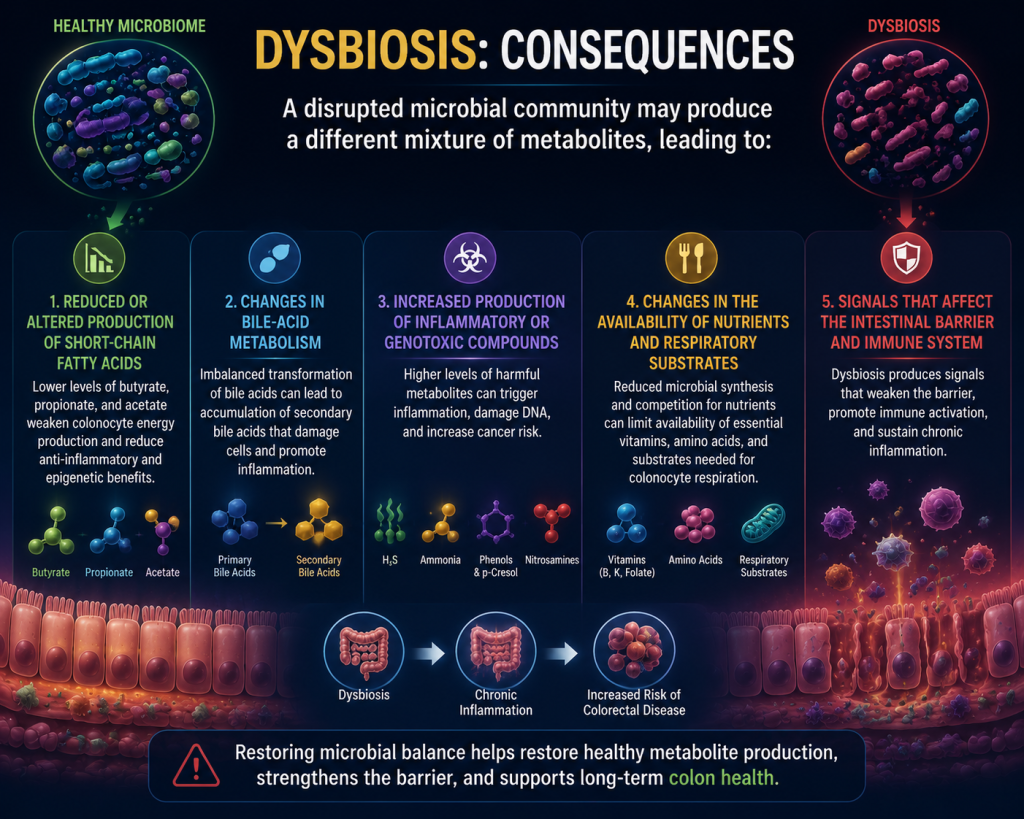
The colon contains a complex microbial ecosystem whose members compete, cooperate, and transform dietary material into biologically active compounds. In a stable ecosystem, these microbial activities help support colonocyte metabolism, barrier function, and immune regulation.
Dysbiosis describes a disruption in this ecological balance. It does not refer to one universally unhealthy microbiome or the presence of a single harmful organism. Different individuals may show different microbial patterns. What matters biologically is not only which organisms are present, but also what the microbial community is doing.
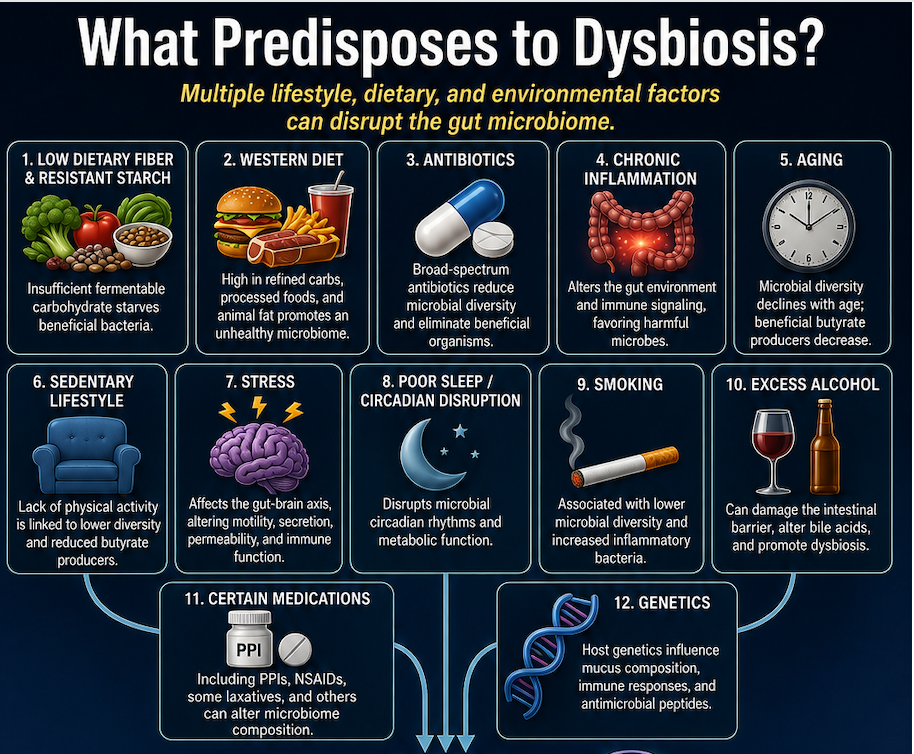
Conditions that Predispose to Dysbiosis
Dysbiosis rarely develops from a single cause. Instead, it usually results from the combined effects of diet, lifestyle, medications, aging, and environmental influences that gradually alter the composition and function of the gut microbiome. Among these, a diet low in dietary fiber and resistant starch is likely the most important nutritional factor because beneficial intestinal bacteria depend on fermentable carbohydrates as their primary energy source. Diets high in processed foods, refined carbohydrates, and animal fats further promote microbial communities that differ from those supported by whole plant foods. Other contributors—including repeated antibiotic exposure, chronic inflammation, psychological stress, poor sleep, smoking, excess alcohol consumption, sedentary behavior, certain medications, and host genetic factors—can also reduce microbial diversity and disrupt normal microbial metabolism.
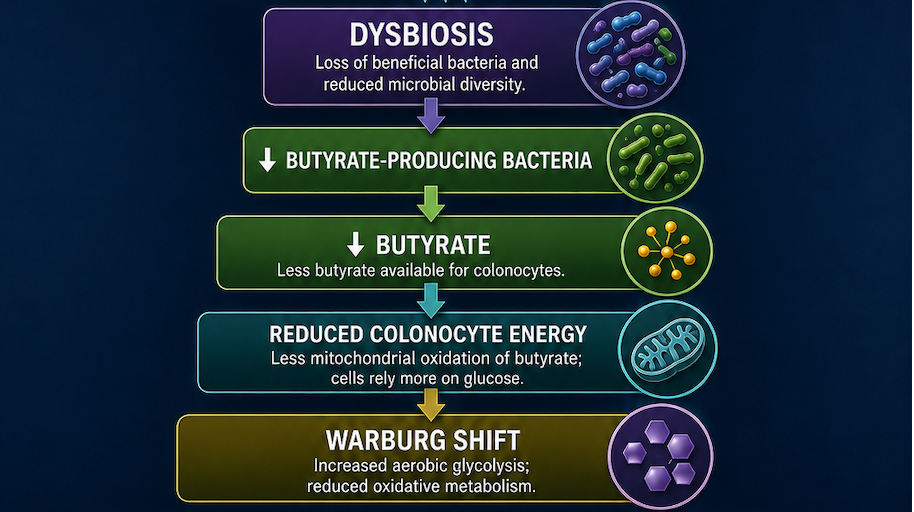
As microbial diversity declines, populations of beneficial butyrate-producing bacteria decrease, leading to reduced production of short-chain fatty acids, particularly butyrate. Because butyrate serves as the principal energy source for healthy colonocytes, diminished butyrate production may impair mitochondrial oxidative metabolism and increase reliance on glucose metabolism. This metabolic shift creates conditions that may favor the development of the Warburg phenotype and the associated changes in gene expression, cellular behavior, and tissue homeostasis. Within the EpiNutrition™ framework, preventing dysbiosis begins with maintaining a healthy microbiome through adequate dietary fiber, resistant starch, diverse plant foods, and lifestyle habits that support long-term microbial health.
From Dysbiosis to the Warburg Effect
Dysbiosis initiates a biological cascade that may fundamentally alter colonocyte metabolism. As beneficial microbial populations decline, particularly butyrate-producing bacteria such as Faecalibacterium prausnitzii, Roseburia species, and Eubacterium rectale, the production of butyrate falls. Because butyrate serves as the principal energy source for healthy colonocytes, reduced availability of this microbial metabolite limits mitochondrial oxidative metabolism and decreases efficient ATP production.
As mitochondrial energy production declines, colonocytes may become increasingly dependent on glucose metabolism to meet their energy requirements. This metabolic adaptation favors aerobic glycolysis, or the Warburg effect, in which glucose is preferentially converted to lactate despite the presence of adequate oxygen. Although this pathway generates less ATP, it rapidly supplies the metabolic intermediates needed for cellular growth and proliferation.
Within the EpiNutrition™ framework, this sequence provides a biologically plausible link between dysbiosis and early metabolic reprogramming. Loss of butyrate production deprives the colonocyte of its preferred mitochondrial fuel, increasing reliance on glycolysis and potentially creating a metabolic environment that favors epigenetic dysregulation, abnormal cellular behavior, and the earliest stages of colorectal carcinogenesis. Although additional research is needed to define the precise sequence of these events in humans, accumulating experimental evidence supports this model as an important mechanism linking diet, the gut microbiome, and colon health.
References
- Nakatsu G, Li X, Zhou H, Sheng J, Wong SH, Wu WKK, et al. Gut mucosal microbiome across stages of colorectal carcinogenesis. Nature Communications. 2015;6:8727. doi: 10.1038/ncomms9727. PMID: 26515465; PMCID: PMC4640069.
- Yachida S, Mizutani S, Shiroma H, Shiba S, Nakajima T, Sakamoto T, et al. Metagenomic and metabolomic analyses reveal distinct stage-specific phenotypes of the gut microbiota in colorectal cancer. Nature Medicine. 2019;25(6):968–976. doi: 10.1038/s41591-019-0458-7. PMID: 31171880.
- Byndloss MX, Olsan EE, Rivera-Chávez F, Tiffany CR, Cevallos SA, Lokken KL, et al. Microbiota-activated PPAR-γ signaling inhibits dysbiotic Enterobacteriaceae expansion. Science. 2017;357(6351):570–575. doi: 10.1126/science.aam9949. PMID: 28798125; PMCID: PMC5642957.