
Food is information
The Science of EpiNutrition
EpiNutrition™ is the study of food-generated epigenetics and signaling induction.
How does a meal influence which genes a cell reads? How does a cell sense the nutrients that arrive after you eat? We follow these questions from the food on your plate to the cells lining your colon.
Why the colon?
In the colon, the microbes that transform a meal live alongside the cells that respond to it. That makes it a useful place to study how food influences gene activity, how cells sense nutrients, and how the gut communicates with the brain.
Inside the colon liningColon health
Take the fiber in a bean. Microbes can ferment it into butyrate, a fuel for the cells lining the colon. Butyrate can also change chemical marks on histones, the proteins around which DNA is wrapped. These marks help regulate which genes a cell reads.
Protein offers a second example. Cells sense amino acids from a meal through pathways such as mTORC1, which helps regulate growth in the renewing lining. Colorectal health is our first application, with a particular interest in early-onset colorectal cancer.
Signals beyond the liningThe gut–brain axis
How does your brain know you have eaten enough? The colon can contribute to that conversation. Its microbes also make propionate from fiber. In a human study, delivering propionate to the colon increased the release of two gut hormones, PYY and GLP-1, that help regulate appetite.
The gut and brain communicate in both directions through nerves, hormones, and immune signals. Appetite is one example of that conversation.
Follow fiber from food to cell
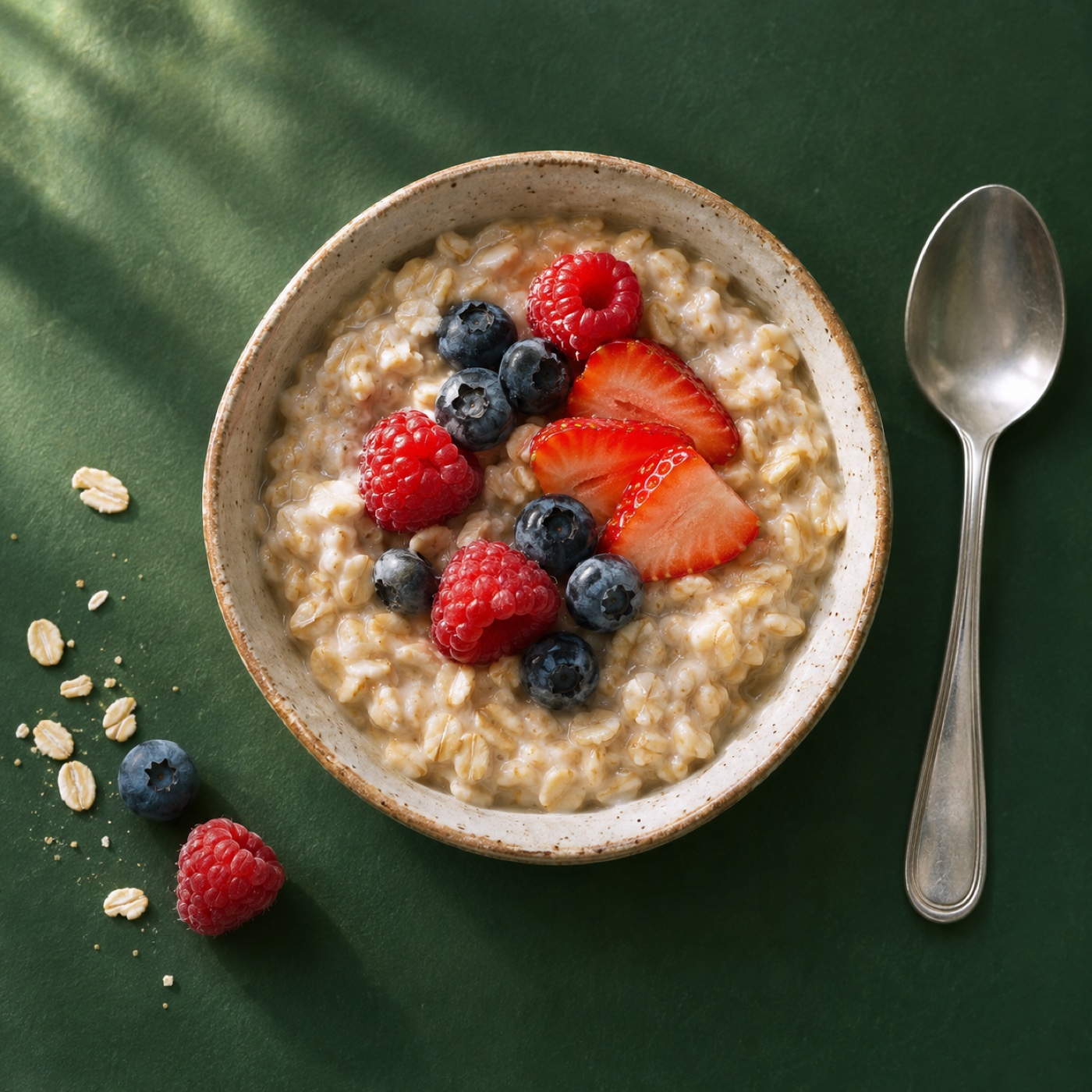
Follow the fiber in a bowl of oatmeal.
Select a stage to see what happens.
The starting point
A meal brings more
than energy.
Oats and berries supply nutrients, fiber, and plant compounds. Digestion releases many nutrients for absorption. Some food components reach the colon, where microbes can transform them.
Some of the fiber in oats becomes a substrate—a material that gut microbes can use.
A simplified learning pathway. These processes overlap, and responses vary between people. A meal does not predictably switch specific genes on or off.
EpiNutrition Library
Explore books, PDF downloads, and illustrated video chapters with Dr. Martin Coyne.
Food, genes & colorectal health
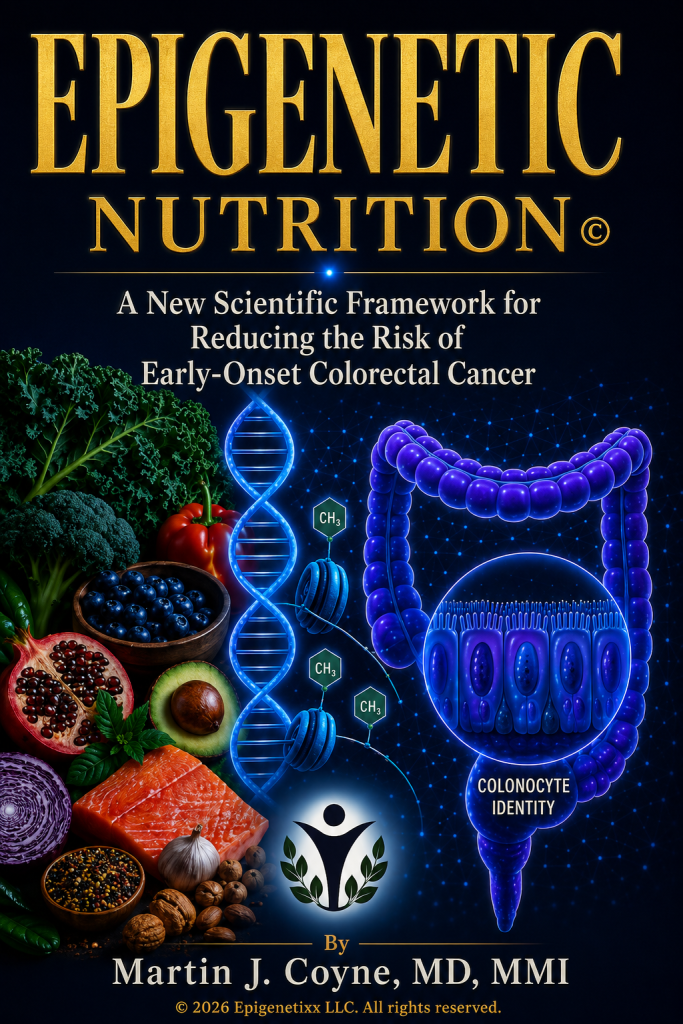
Epigenetic Nutrition
A broader view of the connections between food, cellular biology, and health.
Fiber & the microbial world
A Bean’s Journey
Follow a humble bean from seed to the remarkable ecosystem within us.
Food, microbes & gene activity
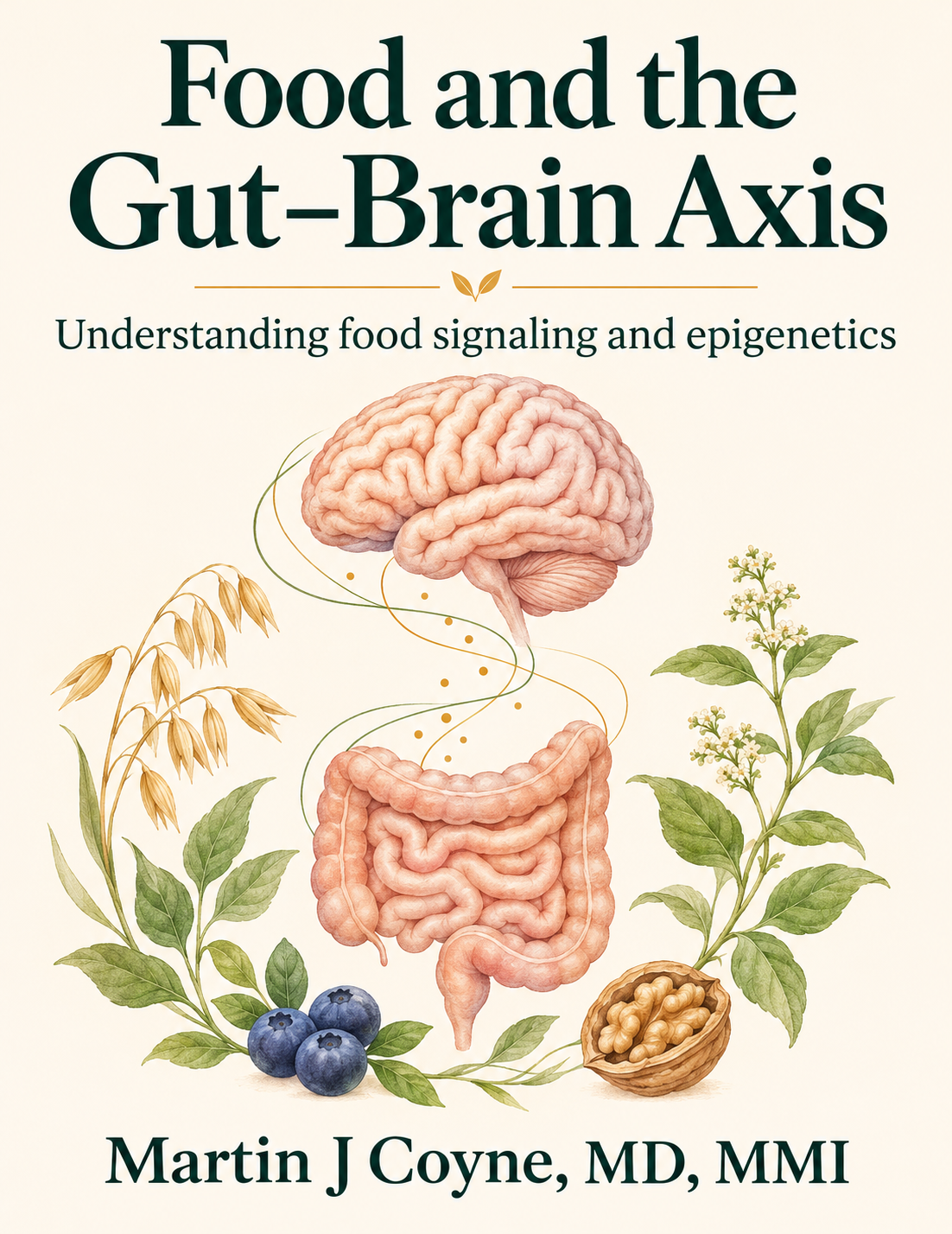
Food and the Gut-Brain Axis
An accessible guide to how food, gut microbes, and signaling connect with gene activity.
By Martin J Coyne, MD, MMI
EpiNutrition Toolbox
Explore the science of food, then find meal ideas for home or eating out.
Play the Epigenetic Piano
Listen to three melodies played on the same piano. Explore how signals from food can influence which genes your cells use and why that matters for your health.
EpiNutrition
At Home
Start with what’s in your kitchen.
Turn ingredients into recipe ideas, cooking steps, and a shopping list.
EpiNutrition
On the Go
Find your way through a menu.
Explore menu choices in the context of your selected nutrition goal.
EpiNutrition
Food & Mood
Meals that fit your day.
Explore 24 practical recipes, plan meals, and build a shopping list.
Your daily summary
Record mood, energy and sleep, and review your daily tracking report. Entries stay in your browser.
The learning library and Food & Mood prototype are free. At Home and On the Go share a $10 monthly subscription covering 100 combined uses. Each of those two tools offers a free trial use. Check ingredients and allergies when using AI suggestions.
Knowledge belongs at every table
Better understanding.
More informed choices.
EpiNutrition is an education program of ProtectU45 Initiative Inc., founded by Martin J. Coyne, MD, MMI. We connect the science of nutrition with the questions people ask about food and health.
Meet our nonprofit