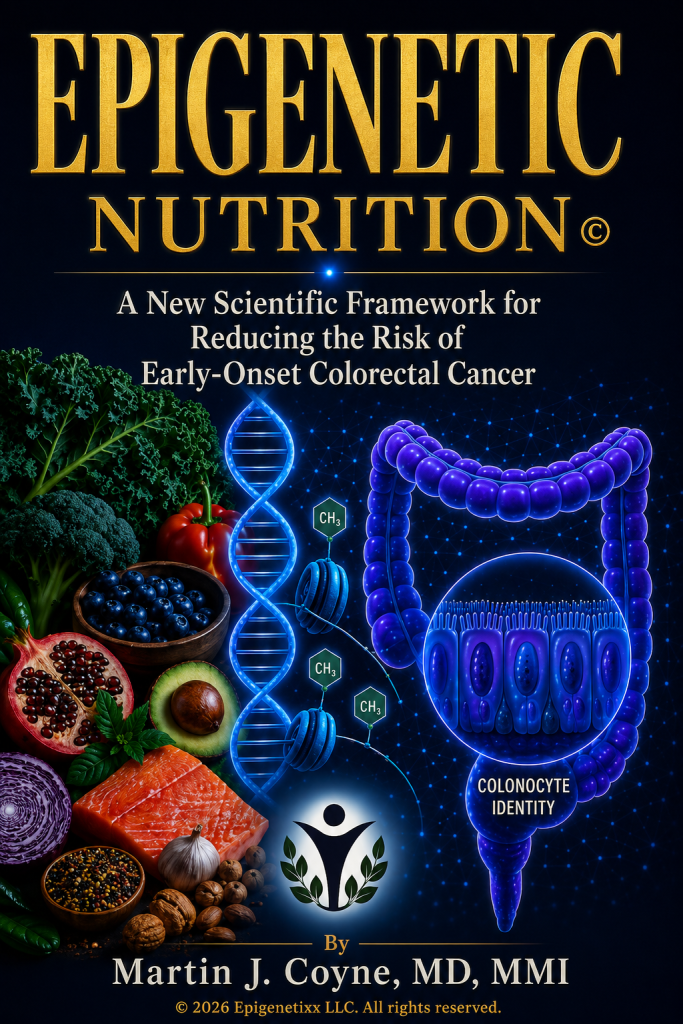
Read Epigenetic Nutrition©
Explore the available chapters are below. While each chapter builds on the previous one, every chapter can also be read as a standalone resource.
Your free account provides access to all currently available free chapters.
Table of Contents
Part 1 – Foundations
Understanding the biology of the healthy colon and the epigenetic mechanisms that allow nutrition to influence gene expression.
Introduction
Why early-onset colorectal cancer is increasing—and why prevention research must look beyond detecting visible disease.
Chapter 1: The Colon – A Difficult Environment
Discover why the colon’s dense microbial population, low-oxygen conditions, continual exposure to dietary compounds, and rapid cellular renewal make it a uniquely challenging biological environment.
Chapter 2: Epigenetics – The Colonocyte’s Adaptive Operating System
Explore how DNA methylation, histone modification, chromatin remodeling, and noncoding RNAs help colonocytes adapt to changing metabolic and microbial signals—and how disruption of this regulatory system may contribute to colorectal cancer development.
Part II – Nutrition, the Microbiome & Metabolism
Learn how food shapes the gut microbiome, generates microbial metabolites, and influences the biology of colon cells.
Chapter 3: Soluble Fiber
Learn how soluble fiber feeds the colonic microbiome, supports short-chain fatty acid production, and connects diet with colonocyte metabolism and epigenetic regulation.
Chapter 4: Polyphenols
Explore how plant polyphenols are absorbed or transformed by the microbiome into compounds that may influence cellular signaling, inflammation, and epigenetic regulation.
Chapter 5: Fiber and Polyphenol Synergy
Discover how fermentable fiber and polyphenols may work together to shape microbial metabolism, support beneficial metabolite production, and influence the colon’s biological environment.
Chapter 6: Protein – Friend or Foe?
Examine how dietary protein supports health while excess protein reaching the colon may undergo microbial fermentation and generate metabolites with differing effects on colon health.
Chapter 7: Saccharolytic vs Proteolytic Metabolism
Discover how different microbial fermentation pathways produce either beneficial or potentially harmful metabolites, influencing the health of the colon and its long-term biological environment.
Part III – When Biology Goes Wron
Learn how food shapes the gut microbiome, generates microbial metabolites, and influences the biology of colon cells.
Chapter 8: Dysbiosis
Learn how disruption of the gut microbiome alters metabolite production, weakens colon health, and creates conditions that may contribute to colorectal cancer development.
Chapter 9: Metabolic Reprogramming – The Beginning of Colorectal Cancer
Explore how early metabolic changes reshape colonocyte function and establish the biological foundation that allows colorectal cancer to develop over time.
Chapter 10: The Butyrate Paradox
Understand why butyrate fuels healthy colon cells while simultaneously suppressing cancer cells, making it one of the colon’s most remarkable protective metabolites.
Part IV – Scientific Evidence
Review the human studies demonstrating how dietary patterns, microbial metabolism, and nutritional interventions influence colon health.
Chapter 11: Fiber Intake and Colorectal Cancer – What the Epidemiology Shows
Review the population studies demonstrating how higher dietary fiber intake is consistently associated with a lower risk of colorectal cancer.
Chapter 12: Polyphenol Intervention Studies
Examine clinical studies showing how dietary polyphenols influence the gut microbiome, reduce inflammation, and support healthy gene regulation.
Chapter 13: Soluble Fiber as Preventative Medicine
Discover why soluble fiber serves as more than nutrition by promoting microbial metabolism, butyrate production, and the maintenance of a healthy colon.
Chapter 14: Whole Grain Fiber
Learn how whole grains contribute fermentable fiber, microbial diversity, and protective metabolites that support long-term colorectal health.
Part V – Putting Science into Practice
Translate scientific evidence into practical dietary strategies that support healthy gene expression and lifelong colon health.
Chapter 15: Meal Timing
Explore how meal timing and overnight fasting influence microbial metabolism, cellular repair, and the biological rhythms that support colon health.
Chapter 16: The Epigenetic Diet ©
See how daily meal planning integrates fiber, polyphenols, protein, and timing into a practical nutritional strategy for supporting healthy gene expression.
Chapter 17: The Progressive Biology of the Epigenetic Diet©
The Epigenetic Diet is intentionally progressive. Each day builds upon the biological adaptations established the day before, gradually transforming the colonic environment from one that merely supports fermentation into one that actively promotes epigenetic stability, cellular resilience, and long-term colorectal health.
Chapter 18: The Epigenetic Diet© 7-Day Plan
Apply the principles of epigenetic nutrition through a practical seven-day program designed to establish healthier dietary patterns and microbial function.
Chapter 19: A New Way of Thinking About Food
Bring together the scientific concepts presented throughout the book and discover a new framework for understanding how nutrition shapes lifelong health.